

by Julianne Malveaux
(Trice Edney Wire) – I have never been much for flag-waving patriotism. I respect the rituals, and I understand why some people are moved by them. But my own relationship with patriotism has always been complicated, even chilly. It is difficult to be sentimental about a nation that enslaved my ancestors, exploited their labor, denied them citizenship, terrorized them for seeking freedom, and then asked their descendants to celebrate as if history were a parade instead of a wound.
I do not even pledge allegiance easily. Allegiance to what? To two nations, one Black and one white, under whose God, divisible, with justice for some? We are asked to place hands over hearts and recite words that have never fully described this country. “The land of the free and the home of the brave” too often reads, in Black history, like the land of the thief and the home of the enslaved. That is not cynicism. It is memory.
As America prepares to celebrate its 250th anniversary, we are sure to see fireworks, pageantry, speeches, flags, concerts, and carefully choreographed displays of national pride. There will be much talk about freedom, democracy, courage, and sacrifice. There will be less talk about enslavement, Indigenous dispossession, racial terror, women’s exclusion, immigrant exploitation, and the centuries-long struggle required to force this country to honor even a portion of its promises.
That is the problem with patriotic spectacle. It too often asks us to celebrate the promise while ignoring the breach.
The Declaration of Independence declared that “all men are created equal” in 1776, even as enslaved people were bought, sold, whipped, raped, and worked without wages. The Constitution protected slavery. Black people built wealth they were forbidden to own. Women were excluded from the franchise. Native people were pushed from their land. And still, generation after generation, people denied the full benefits of citizenship fought to expand the meaning of democracy.
That is the America I honor — not the myth, but the struggle.
Black people have never had the luxury of simple patriotism. We have loved a country that did not love us back. We have served in its wars, built its institutions, paid its taxes, raised its children, enriched its culture, and strengthened its democracy. Yet we have had to fight for every inch of recognition and every fragment of justice.
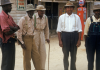
Consider the Black soldiers who fought for democracy abroad and came home to racial terror at home. Some returned from World War I wearing the uniform of the United States Army, only to be beaten, humiliated, or lynched by white mobs who understood that the uniform represented a claim to manhood, dignity, and citizenship. Their service did not protect them. Their patriotism did not save them. Their sacrifice did not guarantee their safety.
That history must be part of America’s 250th anniversary.
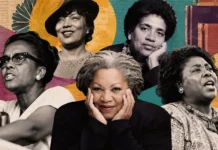
So must the history of Black women who marched, organized, taught, prayed, strategized, resisted, and voted this nation toward a more honest democracy. Black women were pushed to the back of suffrage marches, erased from civic narratives, and expected to serve movements that did not always serve us. Still, we persisted. Still, we organized. Still, we claimed space.
Delta Sigma Theta Sorority, then newly founded, marched in the 1913 Woman Suffrage Procession in Washington, D.C. Black women understood that the vote was not a gift. It was a weapon, a shield, and a demand. Even after the Nineteenth Amendment, Black women in the South were blocked by racist laws and white violence. The right existed on paper before it existed in practice.
That too is America.
Frederick Douglass asked in 1852, “What to the Slave Is the Fourth of July?” His question still echoes because the contradiction still echoes. How does a nation celebrate liberty while denying it? How does a nation praise democracy while suppressing votes? How does a nation honor veterans while abandoning them? How does a nation speak of freedom while banning books, distorting history, and punishing truth-tellers?
America’s 250th anniversary could be an opportunity. It could invite us into a deeper, more mature patriotism — one rooted not in denial, but in honesty. A patriotism that does not require amnesia. A patriotism that understands critique as care. A patriotism that knows telling the truth about America is not the same as hating America.
But that will not happen if we allow the commemoration to become one more exercise in mythmaking.
We have already seen the direction of travel. A cage fight on the White House lawn, wrapped in patriotic branding and corporate spectacle, is not a celebration of democracy. It is the denouement of ritual — the hollowing out of civic meaning until the symbols remain but the substance is gone. When the people’s house becomes an arena, when national commemoration becomes marketing, when patriotism is staged as combat, we should not pretend this is harmless entertainment. It is a sign of civic decay.
We do not need a birthday party built on erasure. We need a reckoning. We need to ask who built this country, who benefited, who was excluded, who resisted, and who is still owed. We need to ask why the racial wealth gap persists, why voting rights remain under attack, why Black women are still demeaned in public life, why schools are being pressured to silence history, and why reparations are treated as radical when theft is treated as tradition.
At 250, America should be old enough to stop lying about itself.
Let there be fireworks if there must be. Let there be speeches and ceremonies. But let there also be memory, humility, and an accounting.
Patriotism without truth is propaganda. Celebration without reckoning is evasion. And a nation that refuses to remember honestly cannot be trusted to move forward justly.
—————-
Dr. julianne alveaux is a DC based economist and author. juliannemalveaux.com; [email protected]