
A Strong Economy For Whom?
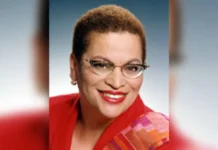
Economist Julianne Malveaux challenges Trump's claim of having "the greatest economy in history," citing weak job growth, rising Black unemployment nearly double the white rate, soaring gas and diesel prices, farmers facing crisis-level fuel costs, and inflation squeezing groceries and heating oil—asking who truly benefits from this celebrated prosperity.

Governing A Blue City In A Red State
Jackson, Mississippi exemplifies the struggles blue cities face in red states, as Republican lawmakers repeatedly blocked funding for critical water infrastructure, contributing to the 2021 water crisis affecting 40,000 residents.

It’s Time For The Department Of Education To Stop Destroying the Dreams Of The...
New federal student loan caps and the elimination of Graduate PLUS loans are forcing students, disproportionately Black, out of college and graduate programs. Marc Morial criticizes the Department of Education's targeting of majors like social work and cuts to diversity funding, urging restored support for higher education and HBCUs instead of limiting students' dreams and economic futures.
MMM 32nd Anniversary!
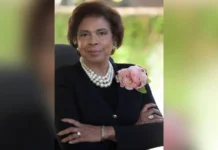
Dr. E. Faye Williams reflects on the Million Man March's 32nd anniversary, recalling her role as Co-Chair alongside Dr. Benjamin Chavis and the involvement of women like Linda Mercado Greene and Nisa Muhammad. She previews the Atlanta celebration on October 10-11 and urges unity, drawing on Minister Farrakhan's legacy and the spirit of togetherness.

Dear Black Men: We Still Need You To Teach
A decade after calling on Black men to teach, the invitation remains — along with a responsibility to prepare, support and retain them.
Christian Nationalism Is Confederate Christianity
David W. Marshall traces Christian nationalism's roots to Confederate Christianity, the pre-Civil War ideology that justified slavery as divinely sanctioned. He examines Jan. 6 symbolism—Confederate flags, crosses, nooses—and explores how Texas Senate candidate James Talarico challenges assumptions that evangelical Christians must vote Republican, potentially disrupting this historical political alliance.
Hunger Doesn’t End With September
Julianne Malveaux examines rising food insecurity across Washington DC, Chicago, and Los Angeles, highlighting stark racial disparities and the wealth gap that leaves Black families most vulnerable. She critiques recent SNAP restrictions that pushed millions off benefits and argues that charity alone cannot fix systemic failures, calling for lasting policy action beyond Hunger Action Month's symbolic gestures.
An Assault On A Free Press Threatens Every American
Marc Morial condemns the White House's expulsion of major media outlets from the press pool, calling it an authoritarian assault on press freedom reminiscent of 1930s tactics. He highlights the launch of "Trump TV," past targeting of Black journalists like April Ryan, and warns this censorship distracts from pressing issues while endangering democracy and marginalized communities' access to truth.
The Audacity Of Joyce Beatty
Rep. Joyce Beatty stands nearly alone on the Kennedy Center board, using lawsuits rather than statements to block Trump's attempted takeover of the JFK memorial institution. Julianne Malveaux contrasts Trump's "criminal audacity" with Beatty's "righteous audacity," questioning what Black political power achieves beyond access, and honoring her courage alongside Barbara Lee, Barbara Jordan and Maxine Waters.

Converse, Target And The Cost Of Who Isn’t In The Room
Recent racially offensive missteps by Converse and Target—an ad resembling a KKK hood and lynching imagery, and a blackface-reminiscent Halloween costume—highlight the risks companies face when diverse perspectives are absent from decision-making. As corporations retreat from DEI initiatives, these incidents illustrate how diversity's value often lies in preventing costly, embarrassing mistakes before they reach consumers.
Must Read
How Navi Pillay’s Nobel Peace Prize Win Sent A Message To...
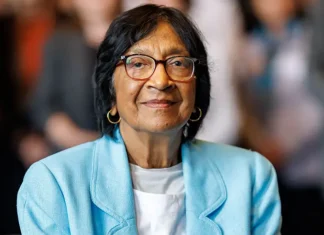
When South African jurist Navi Pillay won this year’s Nobel Peace Prize, a large proportion of the human rights community happened to be gathered at a conference at the Nuremberg Court in Germany, where the landmark trial of Nazi leaders almost 80 years ago laid the foundations for modern international law.