

by Julianne Malveaux
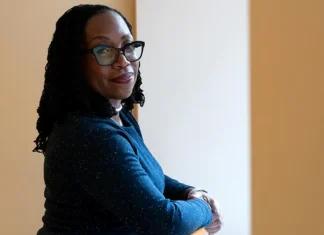
(Trice Edney Wire) – Standing up to a bully requires more than slogans, press releases or carefully staged outrage. It requires looking power in the face, refusing intimidation and saying, plainly, no. Congresswoman Joyce Beatty has that courage.
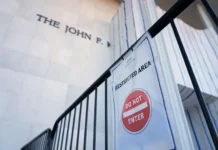
The Ohio Democrat and former chair of the Congressional Black Caucus is standing virtually alone inside the Kennedy Center’s governing structure against Donald Trump’s attempted seizure of a national cultural institution. Trump has installed loyalists, pushed aside dissenters and tried to plaster his name onto a building Congress designated as a living memorial to President John F. Kennedy.
Beatty sued. And she won—not once, but twice. She did not merely issue a statement; she used the law, reminding Trump and his enablers that public institutions are not presidential playthings and that a board vote cannot erase an act of Congress.
Trump answered with insults and threats. During a virtual board meeting, he reportedly called Beatty “destructive,” claimed she had “never built anything,” and threatened to hold her responsible if the deteriorating building caused a death. That was not argument. It was intimidation dressed up as authority.
Beatty did not fold. She has been pepper-sprayed while protesting police violence and arrested while demanding voting rights. She knows what it means to put her body—not merely her name—behind a principle. Now she is defending a public institution from a president who thinks anything touched by government belongs to him.
Audacity means boldness—nerve, even temerity. It is neither virtue nor vice until we ask: audacity in the service of what?
Trump’s is criminal audacity: the brazen nerve to privatize public memory and turn a national memorial into a vanity project. It is audacity in the service of ego, domination and theft.
Beatty’s is righteous audacity: the moral nerve to confront illegitimate power and refuse to be muted. Accepting the Nobel Peace Prize in 1964, Dr. Martin Luther King Jr. declared, “I have the audacity to believe,” then spoke of food, education, culture, dignity, equality and freedom for people everywhere. That was audacity in the service of justice. That is the tradition Joyce Beatty claims.
Coming out of Congressional Black Caucus week, her example provokes a larger question: What is Black political power for?
The CBC was founded in 1971 by 13 members who understood that representation without collective action was insufficient. They boycotted President Richard Nixon’s State of the Union address and demanded a meeting about Black America. They were not invited to power’s table because the powerful developed good manners. They organized, insisted and disrupted.
Today the CBC is larger and more institutionally powerful than its founders could have imagined. Black members hold seniority, key committee positions and party leadership. Hakeem Jeffries could become the first Black Speaker of the House. But proximity to power is not power, and titles are not transformation.
CBC week brings urgent policy debates about voting rights, economic justice, health, education and Black political power. It gathers ambitious young people, seasoned public servants, advocates and entrepreneurs—along with more receptions than any human can reasonably attend. Yet we must not confuse access with action or networking with movement-building. The measure of the gathering comes after the ballroom lights go dark.
Will voting rights be defended and predatory redistricting challenged? Will Black unemployment, Black maternal mortality and the racial wealth gap be treated as emergencies rather than perennial panel topics? Will elected officials confront authoritarianism when it is risky?
Joyce Beatty has answered with her actions. Her fight is about more than a building. Cultural institutions tell us whose history is honored and whose names endure. Trump’s desire to rename the Kennedy Center is part of his effort to rewrite history, punish dissent and place himself at the center of every American story. He does not simply want power. He wants tribute. Beatty refuses to pay it.
Black women have often supplied the labor and backbone of American democracy while others received the credit. They organize voters, steady institutions, defend the Constitution—and are told to lower their voices. Beatty’s voice was literally muted during a Kennedy Center meeting. She found another microphone: the federal courts.
Resistance is not always a march. Sometimes it is a lawsuit, a vote or a refusal to consent. Sometimes it is one woman in a hostile room saying, “You may have the votes, but you do not have the law.”
Courage deserves to be named. We saw it in Barbara Lee, standing alone against the sweeping 2001 Authorization for Use of Military Force and warning against a blank check for endless war. We saw it in Barbara Jordan, a freshman on the House Judiciary Committee, making the Constitution thunder during Watergate. We see it in Maxine Waters, using her financial leadership to confront predatory lending, discriminatory finance and attacks on consumers. And we see it now in Joyce Beatty.
The CBC has long called itself the conscience of the Congress. Conscience is not a ceremonial title. It is a duty. At a moment when too many people accommodate the outrageous, normalize the abnormal and calculate the cost of speaking, Beatty has chosen to fight. Her righteous audacity is not simply that she challenged a president. She refused to let public memory become private vanity.
Dr. Julianne Malveaux is a Washington, D.C.-based economist, author and commentator. Visit http://www.juliannemalveaux.com/.