
By Kevin Harris and Richard McDaniel
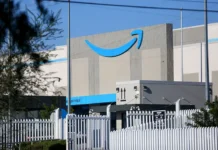
(Trice Edney Wire) – When Amazon cuts 30,000 jobs and Black workers hold nearly 20% of the roles being eliminated while making up just 13% of the workforce, that is not a coincidence. That is a pattern. And it is accelerating.
The layoffs are part of a broader AI driven economic shift that is already reshaping who works, who advances, and who is left behind. And by every measurable indicator, African American workers are among the most exposed.
Bureau of Labor Statistics data show Black workers account for nearly 20% of clerical and administrative support roles despite being just 13% of the workforce. This matters because African Americans remain overrepresented in the exact job categories AI is replacing. Amazon diversity reports show Black employees make up a large share of fulfillment and support roles but less than 8% of technical positions.
Across many of Amazon’s core business units including warehousing, logistics, and transportation, Black workers are overrepresented by as much as 30–40% in certain metro areas, while remaining significantly underrepresented in software, data science, and AI engineering roles.
The economic consequences of such disparities are severe. The median Black household has $44,900 in wealth, compared to $285,000 for white households, according to the Federal Reserve’s latest Survey of Consumer Finances. And Black workers who experience layoffs take longer to find new jobs and face larger post-layoff wage penalties than white workers with similar credentials.
AI-driven displacement threatens to widen these gaps. A 2024 report from the National Bureau of Economic Research found workers displaced by automation experience earnings losses of 20–30% lasting more than a decade, with the steepest losses concentrated among Black workers without access to retraining or internal mobility.
Meanwhile, corporate investment in reskilling lags far behind automation spending. The World Economic Forum reports that while 60% of companies expect AI to eliminate roles, fewer than 25% have retraining pipelines tied to guaranteed job placement. Amazon’s own upskilling programs reach only a fraction of the workers most at risk.
Lawmakers should respond aggressively to reduce harm to Black workers. Maryland Governor Wes Moore, currently the nation’s only Black governor understands the threats AI can pose for African American workers.
In his recent State of the State address, Governor Moore pointed directly to artificial intelligence as one of the defining forces reshaping the economy, arguing that AI will determine who has access to opportunity in the next generation and who is left behind. Moore framed AI not simply as a technological breakthrough, but as a workforce challenge that demands intentional public investment, emphasizing that states must prepare workers for AI-driven change rather than react after jobs disappear. He stressed that innovation without inclusion will deepen inequality, and that the government has a responsibility to ensure emerging technologies expand opportunity rather than concentrate it.
Moore’s remarks underscore the stakes for Black America. If AI policy focuses only on productivity gains while ignoring who occupies the jobs being automated, displacement will fall hardest on Black communities already facing structural barriers to wealth and mobility. His call to align education, workforce development, and economic growth around emerging technologies underscores the need for targeted investment in institutions that serve Black workers at scale, particularly HBCUs.
HBCUs produce nearly 25% of Black STEM graduates despite receiving a fraction of the funding of predominantly white institutions, and they already serve as trusted on-ramps for first-generation and working-class students into high-demand fields. With targeted investment, HBCUs can rapidly expand programs in data analytics, machine learning, cybersecurity, cloud engineering, and applied AI.
HBCU partnerships can build paid apprenticeships, AI co-ops, and credential pathways that move Black workers from declining roles into growing ones, rather than leaving them to compete in an unequal labor market after displacement.
Every dollar invested in AI labs, faculty, research partnerships, and employer-linked training at HBCUs reduces the risk that Black workers will be permanently locked out of the next economy.
And we must remember that Black representation matters in AI. Currently, less than 5% of American AI professionals are Black. This lack of representation shapes which jobs are automated and which are protected. If African Americans are excluded from AI design, they will be disproportionately left out of its benefits.
Amazon’s layoffs are already history. The question now is whether our policy response moves as fast as the technology did or whether Black workers are still waiting for help when the next round of cuts comes.
Kevin Harris and Richard McDaniel are veteran Democratic strategists with over 100 political campaigns between them, including the past five presidential elections and several congressional races. They co-host “Maroon Bison Presents: The Southern Comfort Podcast.”