
As Black churches across the country gather this weekend for prayer vigils, memorial sermons and racial justice commemorations marking six years since George Floyd’s murder, many clergy say the observances are rooted in a simple warning from Leslie Redmond, former Minneapolis NAACP president: What we don’t remember, we repeat.
Yet it comes at a perilous moment. During the era of President Donald Trump — when civil rights laws are being dismantled, white grievances are given priority and Black history is under attack — pastors and activists see growing political pressure to soften, rewrite or move past the racial reckoning of 2020.
But faith leaders say the racial reckoning that began May 25, 2020, when Floyd died beneath the knee of a white Minneapolis police officer, isn’t over. They believe the church has become one of the nation’s last institutions guarding Floyd’s legacy, keeping alive the spiritual, political, and moral questions raised by his death.
Mourning and Activism
Leading up to the anniversary of Floyd’s death, churches and faith communities nationwide are marking the date with worship services, prayer vigils, gospel concerts and racial justice gatherings that blend mourning with renewed activism.
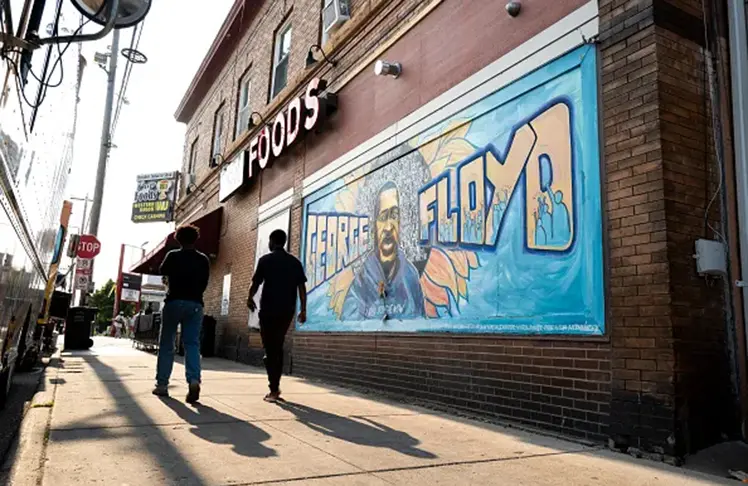
In Minneapolis, events centered around George Floyd Square include a Sunday worship service, gospel performances, a candlelight vigil and the Rise and Remember Festival. Organizers of the event say the focus this year is healing, community joy and resisting what activists describe as a national backlash against racial justice efforts.
What we don’t remember, we repeat.
Leslie Redmond, former Minneapolis NAACP president
In Houston — Floyd’s hometown — the Rev. Al Sharpton is expected to lead memorial observances at Floyd’s gravesite while also appearing at services at The Church Without Walls. Faith-based observances are also unfolding through denominational networks.
Leaders connected to the Evangelical Lutheran Church in America have circulated anniversary messages framing Floyd’s death as both a spiritual and moral reckoning for the church, Meanwhile, clergy coalitions in Minneapolis are hosting conversations focused on racial healing, public memory and the future of anti-racism work.
Social Divisions, Spiritual Exhaustion
Additional information on Minneapolis remembrance events is available through Sahan Journal’s event guide, while coverage of the Houston memorial events can be found via Houston Chronicle reporting.
The killing on May 25, 2020, sparked worldwide protests and renewed scrutiny of police brutality and systemic racism. But pastors say it also altered the emotional and theological landscape inside Black congregations already carrying the weight of racial trauma.
Organizers connected to this year’s Rise & Remember Festival in Minneapolis say the anniversary is also about resisting what they see as growing political and cultural efforts to minimize the racial justice movement that followed Floyd’s death.
For many pastors, Floyd’s death exposed not only social divisions but deep spiritual exhaustion among Black Americans.
The Rev. Karen Brau of Luther Place Memorial Church in Washington, D.C., recently framed the church’s responsibility in light of Floyd’s legacy as one of continued “truth-telling,” saying, “I think the ongoing truth-telling … remains relevant and necessary.”
‘Slow Drift Toward Forgetting’
Across the country, churches responded with prayer vigils, protest marches, Bible studies and racial justice ministries. Some clergy preached directly about police violence for the first time. Others partnered with congregations across racial lines to discuss systemic racism and reconciliation.
For some faith leaders, the killing created what theologians often call a “Kairos moment” — a decisive time that demands moral action. Yet many clergy now say the church faces a complicated season marked by political backlash against diversity and inclusion efforts.
Vicar Jenny Alexander-Allen, speaking at a Washington-area racial justice vigil earlier this year, warned against what she described as “the slow drift toward forgetting” surrounding both racial violence and the political forces shaping public memory.
Faith, Justice, Survival
For many Black Christians, Floyd’s death also reshaped worship itself. Sermons became more urgent. Prayer services became spaces for lament. Churches increasingly addressed racial trauma alongside spiritual healing.
Some congregations established anti-racism ministries, reparations initiatives and partnerships with community activists. Others encouraged members to vote, protest and advocate for criminal justice reform as expressions of faith rather than partisan politics.
Six years later, pastors say the emotional wound remains fresh even as public attention shifts elsewhere. Many clergy argue the Black church cannot afford silence because the issues exposed by Floyd’s murder — policing disparities, racial inequality and the devaluation of Black life — remain unresolved.
For churches shaped by both scripture and struggle, Floyd’s death became more than a national headline. It became a reminder that faith, justice and survival in Black America have long been inseparable.