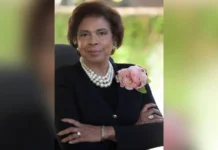


Dr. Lisa Clarke Harvin has multiple life roles. She is by turns a daughter, a wife, a mother, a scholar, and — with her husband, Bishop Durant Harvin — co-pastor of the Greater Immanuel Faith Temple in Columbia, Maryland. Perhaps her most important role is as a trained grief counselor.
Yet she found herself as helpless as anyone in the presence of death.
When her father died, Harvin — a self-proclaimed “daddy’s girl” — learned first-hand about processing grief and what it entails. She had to rely on spiritual tools to navigate the journey. She found that the only way to heal is to be determined, diligent, and intentional about self-care, knowing that it could lead to a deeper relationship with God.
At the same time, Harvin learned that the greater part of grief ministry is simply helping the grieving understand that they are not alone. She believes it’s a privilege to be present in someone’s most vulnerable place.
“Sometimes I’m just present,” she tells Word In Black in a recent interview. “That’s all that’s required. I find it gives me joy and such a sense of accomplishment. And in those moments, I know this is why God put me on the planet to provide that sense of presence.”
Harvin sat down with Word In Black for an extended conversation on grief and how to manage it during the holiday season. Her remarks have been edited for length and clarity.
Word in Black: Can we be grieving and not know it?
Lisa Clarke Harvin: My goodness, yes. We are. I mean, can we just talk about what’s happening in our country? We are all grieving. Grieving what we thought was going to happen with [former vice president and presidential candidate] Kamala Harris — and didn’t happen — as a people. We are absolutely grieving and don’t realize it, or if we do realize it, don’t know what to do with it. It’s just kind of sitting there. So we can walk around and be in deep grief and not realize it and feel like, ‘Why am I down? Why do I feel depressed? Why do I feel withdrawn?’ And behind a lot of that is grief.
Why are young people lashing out and destroying property? A lot of it underneath is grief — not having a role model, not having a father figure in their home, ever, and having to live with wondering why my father didn’t acknowledge me. Number one, we don’t know how to name it. And number two, once we name it, how do we process it?
WIB: What is it that most of us don’t know about grief?
LCH: Grief is going to wait for you. You can try to be as busy as you want to be, no matter what kind of loss it is. Grief is not just about a physical death. We grieve relationships, we grieve when our body changes, when we are going through menopause, ladies. We have retirement, emptiness. There are so many losses we find ourselves grieving.
And whatever your loss is, if you don’t acknowledge it, it will wait to be acknowledged. It will wait as long as it takes. And it’ll wait, and at some point, something’s going to trigger that grief, whether it’s a person, a place, a smell; something is going to trigger it. And then grief is going to slap you in the face.
WIB: Does Black culture excel at grief care? I’m thinking of food. Community Support. Celebratory funeral services.
Grief is not just about a physical death. We grieve relationships, we grieve when our body changes, when we are going through menopause. We have retirement, emptiness. There are so many losses we find ourselves grieving.
Dr. Lisa Clarke Harvin, greater immanuel faith temple
LCH: It absolutely does. I think it’s the best. My grandmother, Miss Lauretta, taught me there’s a wealth of Black culture, especially around grieving. Anytime somebody died, my grandmother was that lady that was bringing that pot of red rice. She made red rice or okra soup. She’s from South Carolina. And I would go with her.
Miss Lauretta would go to the house and just sit and bring that food, and I’d go along and sit and soak up the stories. It wasn’t about the food. It was about the fellowship — just the family, and love, and God. She always told me, ‘This is what God told me to do, Baby.’
WIB: How can our faith best support us, if we let it?
LCH: Well, prayer, number one. You want to definitely tap into your devotional time.
When I lost my dad, I learned more about God in that year, and that was 2020, than I ever had. And at that point, I had been preaching, co-pastoring the church. And I’m thinking my relationship with God is solid. And then my dad passed, and it rocked my world, right? Because I’m a daddy’s girl. I had to really dig and have some honest conversations with God about my disappointment that he didn’t save my dad.
I was disappointed that, as a faith leader, you’re really not allowed to grieve. I learned more about myself than I ever would have. So my gift that came out of my father’s death was a deeper relationship with God, and my faith was fortified because I had no other choice but to lean and depend on God. So I encourage people to stand on God’s word and put it into action. Be diligent and intentional.
WIB: How can we possibly survive the holidays when we’ve experienced a recent death?
LCH: First thing is to acknowledge your pain, and then you want to do what’s right for you. I tell people all the time, this is your time to be selfish. So if you don’t want to go to the office Christmas party or attend Christmas events or Thanksgiving events, you don’t have to. It’s all about what brings comfort to you in that moment.
So sometimes that means turning off the television because we know we’re going to see “It’s the most wonderful time of the year” a million times. We’re going to hear that song over. And for you, it’s not. Maybe take a fast on social media because you don’t want to see families with all their matching pajamas and all these things that normally would make people smile.
I can give you some strategies I offer my clients:
- Acknowledge Your Feelings. Allow yourself to feel and express your emotions.
- Honor the Loved One’s Memory. Create a special tradition to remember your loved one, such as lighting a candle, sharing stories, or setting a place for them at the table.
- Set Realistic Expectations. If you’re grieving during the holidays, understand that it’s okay not to feel festive. Permit yourself to adjust your plans and avoid taking on more than you feel ready to handle.
- Reach Out for Support. Connect with friends, family, or support groups. Talking about your feelings can provide comfort and understanding.
- Establish New Traditions. Embrace the idea of creating new memories. This can help in redefining the holidays without the loved one.
- Take Care of Yourself. Prioritize self-care by maintaining a healthy routine, eating well, getting enough rest, and engaging in activities that bring you joy.
- Limit Stressors. If certain events or activities are too overwhelming, feel free to decline invitations or take breaks as needed.
- Permit Yourself to Grieve. Recognize that grief is a personal journey and there is no right or wrong way to feel.
- Seek Professional Help. If grief becomes too heavy to bear alone, consider speaking with a therapist or counselor who specializes in grief.
- Focus on Gratitude. Try to find moments of gratitude during the holidays, reflecting on positive memories and experiences shared with your loved one.