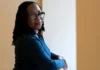

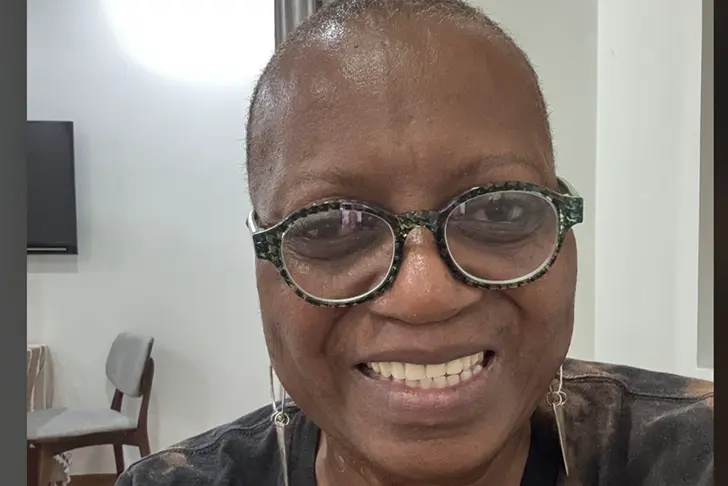
Greta Cobb watches people gather at the beach in Vietnam before sunrise. Older adults walk toward the water, stand on the sand and wait for the light. For the Baltimore native, the daily scene is both an invitation to move and a picture of the life she is trying to build.
“I wish I had done this earlier,” Cobb, 65, said in a Zoom interview from Vietnam.
“Living outside of the U.S., Vietnam is amazing.”
Cobb calls herself an expatriate. She has lived outside the United States since 2024 and says she does not plan to move back. But she is emphatic about one thing. “I’m not giving up my citizenship,” she said. Her U.S. passport remains part of her life abroad.
Hard Changes, Hard Decisions
Getting there took more than a plane ticket. Cobb described a period marked by homelessness, a stroke that affected her vision, the loss of a contracting job, and a year spent sleeping on an air mattress while she worked out how to support herself. She eventually used her Social Security income to begin a new life in Mexico. Then in August, she arrived in Vietnam.
Her departure was less a carefully financed retirement than a decision to keep going after the life she knew became difficult to sustain.
Before her move, Cobb said, she worked as a project manager on a contract with the U.S. Food and Drug Administration. Around the time she learned her dissertation at the University of Sedona had been approved, she woke to blurred vision in her right eye. At a hospital, she said doctors told her she had experienced strokes, including one affecting her sight. She still lives with limited vision in that eye.
“People see the outside, but they don’t see the damage on the inside,” Cobb said. Stroke fatigue and forgetfulness, she explained, can shape an ordinary conversation and an ordinary day.
I wish I had done this earlier. Living outside of the U.S., Vietnam is amazing.”
GRETA COBB, RETIREE AND BLACK AMERICAN EXPATRIATe
Recovery was still on her mind when she learned her FDA contract would end. Cobb applied for other jobs. She briefly took a position at the Pentagon, then decided she could not continue the long commute from Baltimore and the demanding work. She gave away furniture, clothes and books. She stayed with a friend’s sister as she considered what came next.
“I wasn’t sad about getting rid of my stuff,” she said. “I was sad about starting over.”
Warm weather appealed to Cobb, who said she also has Raynaud’s syndrome, a condition that leaves her hands and feet cold. A short visit to Mexico persuaded her she could live there. Once she received her first Social Security payment, she bought a one-way ticket.
‘I’m Going to Make It.’
The first nights in Mexico tested her resolve. Staying in a place she did not know, with limited vision and little Spanish, Cobb made herself a modest promise: “If I can do one night, I’m going to make it.”
She kept that promise, then tried walking around her neighborhood. One evening, she lost her way as darkness fell. “Father, show me what am I supposed to do?” she recalled saying, turning to her faith. “I’m lost here. I don’t know anyone.” She turned around and saw the house where she was staying. The next day, she went out again. Slowly, unfamiliar streets became familiar.
Cobb got to know people at a neighborhood market and befriended a man she nicknamed “Dr. Mango” because she regularly stopped for a mango drink at his family’s business. She later learned he was an ophthalmologist. She began teaching him English each Tuesday.
Cobb said a two-hour eye examination in Mexico cost her $40. The experience strengthened her interest in finding care and community beyond the United States, though she knows her vision loss is unresolved. She has explored meditation, changes in diet and other practices as part of her personal approach to well-being. Those choices are her account of living with the effects of a stroke, not a substitute for stroke care. The Centers for Disease Control and Prevention says recovery from a stroke varies from person to person and may take months or years.
Mexico gave Cobb room to rest.
“I think I slept for two weeks straight,” she said of her early days there. It also taught her to depend on neighbors and friends when she did not speak the language well,” she says. “At the market, familiar faces began to replace some of the isolation she had feared.
Yet her ability to remain in Mexico depended on visa rules and finances. As she weighed her options, Vietnam kept coming to mind. She arrived in August and now speaks with evident delight of the beach, the greenery and the older people she sees outside each morning.
‘The Partially Blind Nomad’
Vietnam also carries a family connection. Cobb said her father served there in the U.S. Army. Visiting places that preserve the war’s history has made her think about what he experienced. “I’m seeing the other side that I never knew of my father,” she said. “And it makes me humble.”
She’s beginning to share her story as “The Partially Blind Nomad” on YouTube, with details of her struggle and her successes.
She is learning to live with uncertainty. Vietnam’s electronic visas can be valid for up to 90 days; Cobb expects to travel and seek permission to return as she works out a longer path. She is also studying artificial intelligence and hopes to develop a project serving older adults, particularly people recovering from strokes who face isolation.
Cobb still believes in the divine, but she no longer accepts everything she learned about God in church. Watching Christian relatives isolate her aunt when she was homeless made her question teachings about love that she could not see lived out. She describes her faith now as a process of unlearning what she inherited and allowing Spirit to teach her. To Cobb, that Spirit is creative, moving, and loving, with love being the truest expression of the divine. “Spirit is not only electric, it creates, it moves, it loves. The only real thing is love. You can’t take that,” she said.
For now, her life is neither settled nor free of difficulty. She said she has been sick twice since arriving in Vietnam. Her sight remains limited. She must keep track of her visa and her money. But she speaks about those realities without wishing to reclaim the apartment, possessions, and job she left behind in the United States.
“Mexico taught me how to relax,” Cobb said. Vietnam, she added, is teaching her another way to think about healing.
At sunrise, she sees people gathering at the shore. Cobb joins a community in motion, carrying her Baltimore history, her father’s memory and her U.S. passport with her. She does not know every step that comes next. “I’m living in the unknown,” she said.