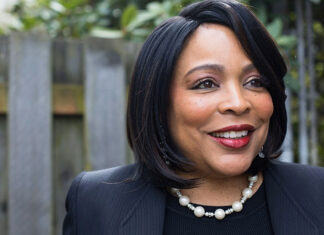

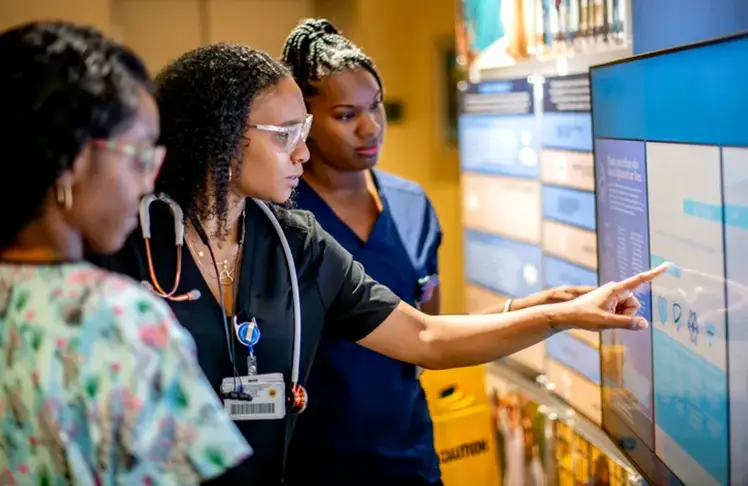
A nursing student at Southern Illinois University, Samaya Royal, has always been fascinated by hospitals and the people who work there. She’s had the “infatuatuation” with healthcare since childhood, when her grandmother, a pediatric nurse, would take young Samaya with her to work.
Now, “When I go to healthcare settings, I want to see more people that look like me,” says Royal, who is studying in an accelerated nursing program. As a patient, she says, “When I see an African American nurse compared to a white nurse, it automatically puts me at ease. I want to do that for other people.”
But recent changes have thrown a barrier into her path: a new Trump administration proposal could make it more difficult for Royal to pay her mounting tuition bills by redefining nursing as a non-professional career.
At issue is an overhaul of federal student loan programs in the so-called “One Big Beautiful Bill Act” that would sharply narrow which courses of study — such as medicine or dentistry — qualify for additional federal aid and which do not, including nursing, Royal’s chosen field and childhood dream. Multiple studies show a growing shortage in the nation’s nursing workforce, driven by burnout, high workloads, and increased demand.
Besides restricting the amount of low-interest federal loans students can take out, the overhaul could hamstring efforts to address racial inequities in higher education. Black students disproportionately depend on student loans to earn college degrees.
Nursing Professionals Push Back Against Change
At the same time, although experts say nurses occupy a critical role in healthcare overall, only 11% of the nation’s more than 5 million nurses are Black. That’s despite overwhelming research showing that Black patients have far better outcomes when their caregivers are also Black.
“Nurses make up the largest segment of the healthcare workforce and the backbone of our nation’s health system,” says Jennifer Mensik Kennedy, president of the American Nurses Association. “At a time when healthcare in our country faces a historic nurse shortage and rising demands, limiting nurses’ access to funding for graduate education threatens the very foundation of patient care.”
“In many communities across the country, particularly in rural and underserved areas, advanced practice registered nurses ensure access to essential, high-quality care that would otherwise be unavailable,” Kennedy says.
Proposal Hits Black Students and Patients Hardest
Sheldon D. Fields, president of the National Black Nurses Association, was more direct.
“I am profoundly disappointed by the Department of Education’s proposal to exclude nursing from the definition of professional degree programs,” he says. The decision “undermines our profession’s moral and ethical obligation to train a nursing workforce that is equipped to help our nation achieve health equity for all.”
Professional medical organizations and university programs say the student-loan overhaul would derail or sidetrack the plans of millions of future healthcare professionals the nation urgently needs. They are calling on the White House to reverse its plans and ditch the overhaul of federal student loan policy.
The administration’s narrow definition of “professional programs” includes medicine, law, and theology — and chiropractic medicine. Having the “professional” label allows students to borrow larger amounts of federal student loan funds to pursue advanced degrees in those fields. Several nursing roles require advanced degrees, including family medicine nurse practitioners and certified nurse midwives.
A bipartisan group of lawmakers has demanded that the administration reconsider its decision. The elected officials stress the proposed change “will make it more difficult for nurses to join the health care workforce because post-baccalaureate nursing degrees are excluded from the list of health care degrees in the definition of a “professional degree,” according to a letter dated Dec. 12.
“Classifying these programs as graduate programs would result in these students having to take out additional student loans to cover the remainder of their tuition, which will limit the ability for students to complete their advanced degree.”
Dismantling Dreams
Samaya Royal, the nursing student, is experiencing the upheaval firsthand. She got her undergraduate degree while on a volleyball scholarship, but financing her nursing degree has been a challenge, even before the proposed changes to federal student aid.
“I’ve been applying to multiple scholarships,” she says. “I exhausted my [federal aid]. And in the midst of applying for scholarships and seeing how it’s been more of a slow progression, I just decided, ‘Why don’t I reach out to Black businesses and see if they can help me and see if they would be willing to help me and if I just explain to them my story?’”
Royal is letting her fingers do the walking by contacting Black businesses and organizations for help.
“I’ve been just taking almost a little bit of every day to send about 20 to 50 emails at least to [tell] different Black organizations I find about just my situation,” she says.
Royal acknowledges she and her classmates are definitely feeling squeezed.
“I know a few people who have dropped out because they just can’t pay,” she says. “Others are drowning, working full-time, and going to school full-time. And mentally, you kind of feel like, if it’s not a professional career, am I not making a difference?”
“I feel like my job is very important,” Royal says. “We serve the community face-to-face every day. So, I feel like it should be considered a professional career.”