





Finances FYI Presented by JPMorgan Chase
Being smart with personal finances in a volatile economy can feel like unending work. How do you plan for an uncertain financial market? What choices will make the biggest impact?
All of these questions go beyond simple budgeting and require a more advanced financial plan, just like the professionals use. It’s time to start using cash flow forecasting tools.
What is Cash Flow Forecasting?
A cash flow forecasting tool lets you see your current financial position relative to available cash. It tracks cash inflow and outflow to give you a balance.
The forecasting portion comes when the tools predict where your financial position will be in the future (one month, six months, a year), given the current information.If your finances change, you update the model and get more accurate predictions.
Key Features
With any cash flow forecasting tool, you’ll have the following information:
- Cash inflows (paychecks, dividends, capital from loans or gifts)
- Cash outflows (bills, interest payments, savings, investments)
- Current and future predictions for cash flow
- Tools to adjust individual inputs to see future consequences
- Ability to connect to your financial institutions
This final feature is key, especially in a volatile economy. You can adjust things like interest rates, dividends, and investment principal amounts to see how your financial situation will change down the line. Depending on your personal risk tolerance, you now have the information to make smarter choices based on several potential outcomes.
Personal Finances: Why Track Cash Flow?
Most cash flow forecasting tools were built for businesses, so why use one with your personal finances? It gives you a better financial picture than a simple account balance.
Someone with $5,000 in the bank and upcoming expenses totaling $4,500 is in a very different position than someone with a $5,000 balance and upcoming expenses totaling $7,500. By tracking your cash flow and paying attention to forecasts, you can plan your financial position more accurately to make smarter choices.
For most people, the above situations would be easy to track and remember, but finances are rarely that straightforward. Investments, emergency projects, and a volatile economy all make it harder to predict your financial future without the proper tools.
Simple Tools for Cash Flow Financing
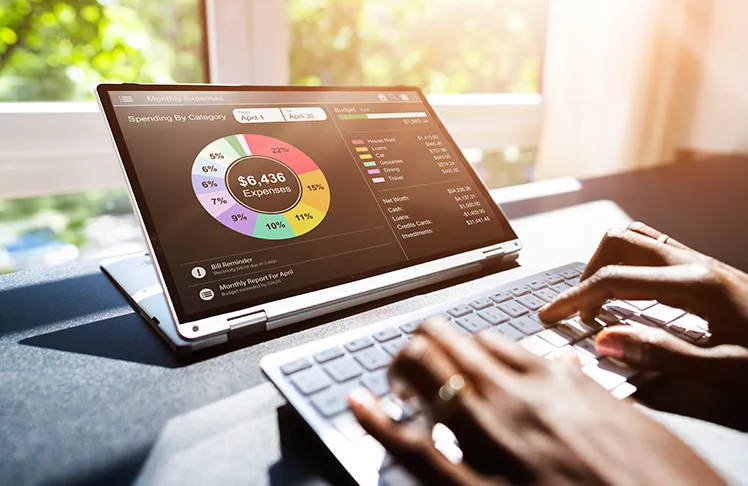
In the last few years, many powerful cash flow forecasting tools have come online thanks to the use of AI. While most of these tools were built for businesses to use, you can certainly take advantage of the features for your personal finances.
If your situation is fairly simple, opt to use the most basic tool first. If you find yourself needing more advanced features, then you can upgrade.
Apps and Websites
- QuickBooks: This financial software has been around for decades. It can handle the most complex situations. No free version.
- Monarch Money: A budgeting app that includes cash flow tracking and AI-assist to build better predictions. No free version.
- Empower: Excellent for those with a lot of investments. Free for most features.
- PocketSmith: One of the only tools specifically built for individuals rather than businesses. Offers free and paid versions.
DIY Options
If you don’t have the time, money, or desire to choose a cash flow forecasting program, you can also get the same results with some DIY spreadsheet knowledge (especially if your finances are straightforward).
Excel is the original financial toolbox and can help you track every category for both income and expenses. By using the built-in formulas for interest rates, you can adjust your tables to reflect current and future cash flow. This basic tutorial can show you how to get started.
Getting Started with Cash Flow Forecasting
It’s never too late (or too early!) to start tracking your cash flow.
First Steps
Whether you use a professional tool or start with DIY options, here are the first steps you’ll need to take before you download any software:
- Know your predictable income and expenses (amounts and frequencies).
- Find information on all current investments, loans, and other inflow/outflow vessels.
- Double-check your online security settings to ensure safe conditions for sharing/browsing financial information in a new app.
Small Changes and Easy Wins
If setting up a new cash flow forecasting system seems like too big of a step right now, there are several small changes you can make to your finances that will help ease you into the transition when you’re ready:
- Track your spending for three months; either write down every transaction or check your accounts once a week and make notes.
- Brainstorm a list of short (<1 year), medium (1-5 years), and long-term (5+ years) goals that will need some kind of financing.
- Choose an achievable financial goal for one month and see how it feels to sacrifice and reach your goal.
When you make these small changes, you’ll begin to train yourself to see the patterns in your cash flow habits. Even when you start using a forecasting tool, it will be crucial to interpret the results, and these first steps will build that skill.
Finances FYI is presented by JPMorgan Chase. JPMorgan Chase is making a $30 billion commitment over the next five years to address some of the largest drivers of the racial wealth divide.