
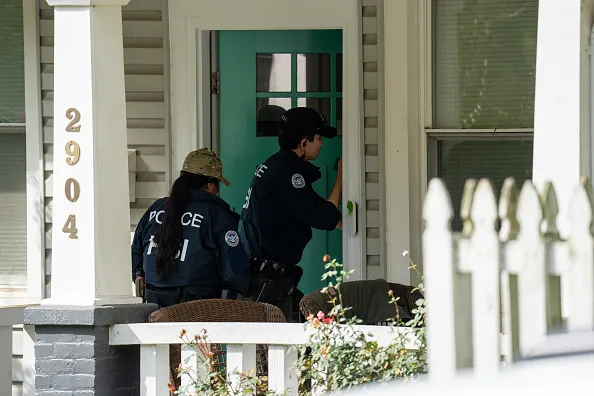
Twenty-two days before a national election, with early ballots already being cast, federal agents arrived at the home of a sitting member of Congress with a search warrant.
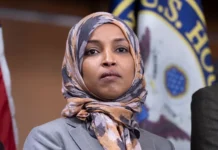
That alone should give every American pause, no matter their party affiliation or what they think of Rep. Ilhan Omar, a Minnesota Democrat, a Black woman and a frequent Trump critic who has served four terms on Capitol Hill and is now up for re-election.
The questions are simple: Why now? What made this search so urgent that it could not wait until after Election Day? And who signed off on it?
The American people deserve answers.
Irreversible Damage

For decades, the U.S. Department of Justice has followed a clear principle in election years: Law enforcement may not time investigative steps to affect an election, and it should take special care with highly visible actions involving candidates in the weeks before voters go to the polls.
That principle does not freeze investigations. It exists because a raid on a candidate’s home cannot go unseen, and the political damage happens whether or not charges are filed.
To be clear: Rep. Omar is not above the law. No member of Congress is. But she is entitled to the same due process and fair treatment as every American. When the government takes an extraordinary step this close to an election, it has the burden to explain it.
Attacks on Black women in public office have become routine. They come as misinformation, personal smears, threats and relentless efforts to question whether these women belong in America, much less the halls of power.
We cannot look at this event in isolation.
For years, Rep. Omar has been singled out as a target for racist tropes. The sitting president told her to “go back” to the country she came from, questioned her loyalty to the nation she serves, and turned her Somali heritage into a punchline at rallies. She has received death threats. She has endured a level of hostility no public servant should face for doing her job.
Pattern of Harassment
We have seen this pattern before, with dubious, high-profile investigations of New York Attorney General Letitia James, who successfully sued President Donald Trump’s businesses for fraud, and Lisa Cook, a member of the Federal Reserve Board of Governors whom Trump repeatedly tried to fire in 2025.
Attacks on Black women in public office have become routine. They come as misinformation, personal smears, threats and relentless efforts to question whether these women belong in America, much less the halls of power.
Too often, the attacks have nothing to do with their records, their performance in office or the issues facing the institutions and people they represent.
This comes at a cost, and we all pay it.
Every minute a Black woman leader spends defending herself is a minute stolen from her constituents, and from the fight on the issues they care about most — from the cost of gas and groceries to fair elections. Every threat adds a new security burden for her family and her staff. Every public attempt to intimidate her sends a message to the next woman deciding whether to run: This could be you.
Abuse of Power
That is why we stand in defense of Rep. Ilhan Omar.
We, as taxpayers, demand three things: A public explanation of why authorities searched her home, assurance that the Justice Department followed its own election-year protocol, and Congressional oversight to ensure federal law enforcement is not being used to settle political scores.
You do not have to share Rep. Omar’s politics to want those answers. You only have to believe that the next presidential administration, of either party, must not have the power to do it again.
In the coming weeks, Americans will decide who represents them. That decision belongs to voters, not to whoever controls the machinery of federal law enforcement.
Defending Black women has never been about shielding anyone from accountability. It is about making sure accountability is never used as cover for retaliation.

That should matter to all of us.
Glynda C. Carr is President, CEO and Co-Founder of Higher Heights for America, the political home for Black women, building a national movement to harness Black women’s political power and leadership. Higher Heights works to expand Black women’s representation, strengthen their civic participation, and ensure Black women have the power to shape the policies and decisions affecting their communities and our democracy.