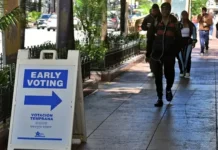
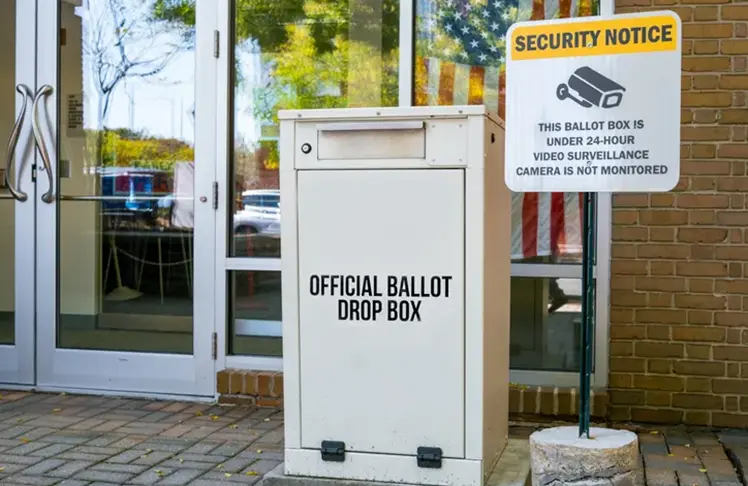
The midterm elections could be the most watched in American history. That might sound reassuring, but for Black voters, being watched at the polls hits differently.
Election Day is less than a month away, and already the NAACP is sounding the alarm to brace voters for what they could encounter when they show up to cast their ballots — everything from federal election monitors and partisan poll watchers to citizen activists armed with cameras and suspicions about voter fraud.
Beyond warning voters, the NAACP is preparing to fight back.
Who Will Be Watching?
On Oct. 24, the NAACP is launching a national legal hub to investigate reports of voter intimidation and suppression and, when necessary, go to court to stop them. Kristen Clarke, the organization’s general counsel, says the organization has assembled an “army of legal volunteers” prepared to seek emergency relief on Election Day.
The move comes as the U.S. Justice Department under President Donald Trump gears up to deploy roughly 1,000 election monitors nationwide — one of the largest such operations in the department’s history.
Meanwhile, partisan and nonpartisan poll watchers, grassroots organizations, international observers and self-styled citizen journalists are preparing their own Election Day operations to ensure fair and free elections. Some activists plan to livestream suspected irregularities.
The U.S. Justice Department under President Donald Trump is gearing up to deploy roughly 1,000 election monitors nationwide — one of the largest such operations in the department’s history.
Axios described the convergence Tuesday as potentially making the 2026 midterms “the most intensely observed, recorded, dissected and challenged election in American history.” For the NAACP, however, the question is who will be watching — and what they intend to do.
The Justice Department has long monitored elections, traditionally dispatching its Civil Rights Division attorneys and other personnel to ensure compliance with federal voting rights laws. After passage of the Voting Rights Act of 1965, federal observers helped ensure that jurisdictions with histories of racial discrimination followed the law and allowed Black citizens to exercise rights they systematically had been denied.
But voting rights advocates say the context in 2026 is dramatically different.
Demands for Information
The Brennan Center for Justice notes that DOJ staff monitors do not have unlimited authority inside polling places. In many states, they cannot enter without permission from state or local election officials. They cannot interfere with voters, direct election officials, or disrupt election administration.
Federal and state laws also prohibit voter intimidation, regardless of who does it.
The NAACP nevertheless says the Trump administration has not adequately explained the purpose or scope of its expanded monitoring operation. But President Donald Trump has repeatedly warned, without evidence, that American elections are vulnerable to widespread fraud, casting doubt on the integrity of November’s midterms.
On Monday, the NAACP filed an emergency lawsuit seeking records about the Justice Department’s plans. The NAACP had previously requested information about where monitors would be deployed, how they would be trained, their qualifications, their legal authority and how they would comply with state election laws.
But the organization says the Justice Department failed to provide those records by the deadline required under federal freedom-of-information law. The stakes became higher when U.S. Attorney General Todd Blanche — Trump’s former personal attorney and his hand-picked choice to lead the DOJ — said election monitors could be deployed in all 50 states.
The administration claims anyone who’s concerned about the monitors is fearmongering and insists the DOJ’s mission is to protect election integrity.
But Clarke, the NAACP’s general counsel, argues voters deserve to know exactly what the government plans to do before Election Day.
Uncertainty around the government watching the polls resonates especially in Black communities, where voter suppression wasn’t limited to literacy tests, poll taxes and whites-only primaries.
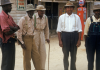
Before the Voting Rights Act, Black citizens attempting to register or vote faced questioning, surveillance, threats, economic retaliation or violence. Particularly in the South, the presence of law enforcement around polling places, voter registration sites and political meetings sent a clear message about who held power — and what would happen to those who challenge it.
Protection or Intimidation?
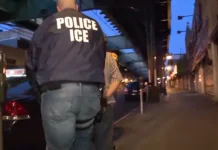
That history helps explain why poll monitoring — including armed federal agents, aggressive partisan observers or people filming voters — could intimidate eligible voters.
The Brennan Center warns that poll watchers cross the line into intimidation by photographing or videotaping voters, attempting to view private voter information, aggressively challenging someone’s eligibility or invading a voter’s personal space.
Trump himself added to those concerns by repeatedly calling for supporters to build a 2026 “Election Integrity Army” even larger than the operation assembled for the 2024 election.
Civil rights groups aren’t waiting to see what happens.
That’s why the NAACP joined other organizations to sue the Department of Homeland Security, the Justice Department and other federal officials over threats that armed federal personnel could appear around polling places.
Meanwhile, voting rights groups are preparing for the worst. That includes Vote Safe, a nonpartisan coalition organized by the Save America Movement, the National Action Network, and the American Federation of Teachers. It plans to deploy hundreds of trained community observers to heavily minority voting precincts in Michigan, Ohio, Georgia, and North Carolina.
Organizers say faith leaders, teachers, veterans, firefighters and other community members will be trained in election law and de-escalation techniques. The project plans to concentrate on precincts around Detroit, Cleveland, Atlanta and Charlotte, where turnout among voters of color is expected to be highest.
In effect, civil rights advocates will be watching the people watching voters.