





Finances FYI Presented by JPMorgan Chase
If you’re a parent, you are one of the first and most important sources of financial literacy education for your kids — whether you’re actively teaching them about money or simply letting them watch and learn from your habits.
According to a survey from the American Bankers Association Foundation, 38% of respondents mainly learned about money and finances from their families. Slightly more daunting? Seventy-two percent of them agreed they would be “better off” if they had learned personal finance basics earlier in life.
Financial education might sound daunting, especially if you wish your own learning had started sooner. But there’s good news: You don’t need to be an expert to teach your kids positive money skills, and you don’t need to have all the answers to start early.
Kids Learn Money Lessons at Home
Thirty states require high schoolers to take a personal finance class to graduate, but kids start developing deeply ingrained financial mindsets long before high school as they watch their parents manage money.
That’s why it’s important for parents to model positive financial habits. Children learn from observing their parents talk about and use money, and small moments can have a big impact.
In your household, is money a source of anxiety, or a tool for success? Which of those two outlooks do your children observe in daily life?
A healthy outlook on finances can build security, freedom, and peace of mind, while constant financial anxiety can have the opposite effect. Kids who learn positive financial habits from their parents are more likely to have a good relationship with money in adulthood.
Later in life, children who discussed money with their parents are more likely to:
· Set up a budget
· Have an emergency fund, more savings, and a retirement account
· Have a good credit score
Meanwhile, they’re less likely to spend their money as soon as they earn it, lie about their spending, expect others to buy them what they want, feel ashamed because they have less than others, and experience loan delinquency and home foreclosures.
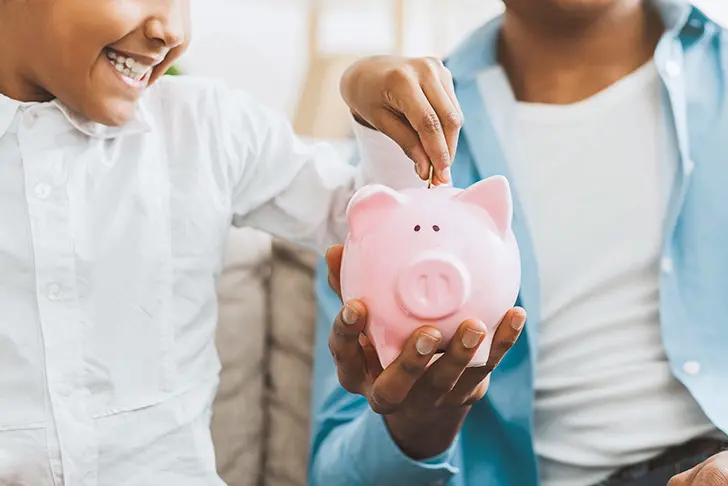
How to Talk to Kids About Money
If a child is old enough to ask for a new toy, they’re likely old enough to start learning basic financial skills. Parents might hesitate to broach the subject because they don’t want to pass on any anxiety, but proactive conversations don’t have to be stressful.
The American Bankers Association shares these examples of how to add little lessons about money into everyday activities:
- Read together. Incorporate books into family reading time that include lessons about money (or that can spark conversations about financial responsibility).
- On payday, talk with your kids about the types of bank accounts, what it looks like to budget a paycheck for essentials like housing, food, and clothing, and how you think about saving for goals and future expenses.
- While shopping with your kids, explain the difference between “needs” and “wants.” Talk about the benefits of comparison shopping, coupons, sales, and store brands.
- When you pay your electric or water bill, show your kids what you’re doing and discuss the different options adults have for paying bills (credit card, auto-withdrawal, etc.).
- Explain how debit and credit cards work, and what you might use each card for. Next time you pay with a credit card, take a minute to explain the importance of building credit without going into debt.
- Give kids the opportunity to practice what they learn. Let them earn their own money by doing household chores and receiving an allowance. Encourage them to save their money for something they want to buy.
When it comes to building positive financial habits, the apple doesn’t fall far from the tree. Parents who take some time to understand their own philosophies toward money will be in a better position to make a positive impact on their kids.