
By Kendall Black, The Portland Medium
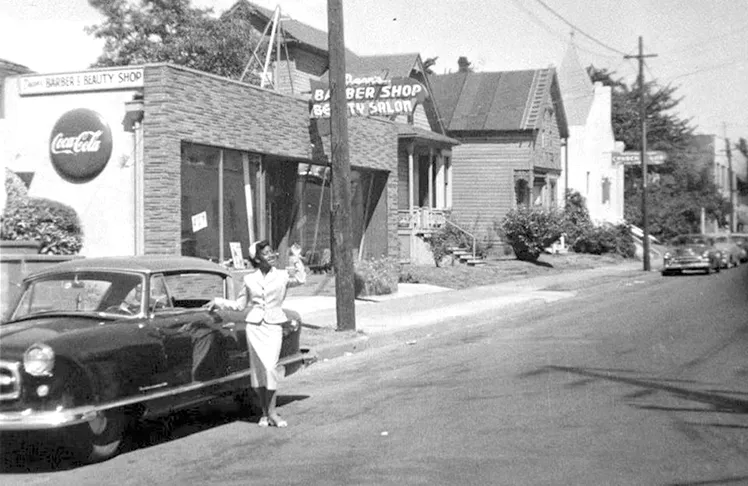
For decades, families have walked through the doors of Dean’s Beauty Salon and Barber Shop in Northeast Portland, returning across generations.
“I did their hair, their kids’ hair, and now their grandkids’ hair,” said Kimberly Brown, owner of Dean’s Beauty Salon and Barber Shop. “What do we need to do to keep this place, and adapt it to a younger crowd?”
That question sits at the center of a broader conversation across Portland, as city leaders confront the growing loss of longstanding local businesses that have long shaped neighborhood identity and community life.
A new report from the Bureau of Planning and Sustainability urges action to preserve those businesses, warning that many are at risk as costs rise and neighborhoods change.
At 70 years old, Dean’s is more than a barbershop. It is one of the oldest continuously operating Black-owned businesses in Portland and a living connection to Lower Albina, once the heart of the city’s Black community.
Already designated as a Historic Landmark, the business has endured waves of urban renewal, disinvestment, gentrification and displacement that reshaped the neighborhood and forced many Black families and businesses out of the community.
Despite those changes, Dean’s remains a cultural anchor, a trusted gathering place where relationships span generations.
But Dean’s is not alone. Across Portland, longstanding businesses face an uncertain future, as rising operating costs, ongoing maintenance needs and the challenge of attracting younger customers threaten long-term sustainability for many owners approaching retirement.
That pattern is reflected citywide. Thousands of independently owned businesses have operated for decades, helping define Portland’s character while anchoring neighborhood economies. According to the study and a companion economic analysis, legacy businesses generate approximately $16.6 billion in economic output and support more than 70,000 jobs across the region.
Researchers identified approximately 4,600 legacy businesses that have operated continuously since at least 2004, each with 50 or fewer employees. Together, they employ tens of thousands of workers and contribute billions of dollars in wages and benefits to the regional economy.
The report makes clear, however, that their value extends beyond economics. Many of these businesses are rooted in communities that have experienced displacement and disinvestment, particularly in historically Black neighborhoods where longstanding institutions have steadily disappeared.
For many Black Portland residents, businesses like Dean’s are more than places of service. They are spaces where relationships are built and sustained, offering continuity in neighborhoods that have undergone significant change.
That role has become more fragile as redevelopment reshapes the city. The report finds that legacy businesses are often concentrated in areas experiencing rapid transformation, where rising commercial rents and shifting demographics increase the risk of displacement.
At the same time, many operate on thin margins and face barriers to accessing capital, while succession planning remains a challenge for owners nearing retirement.
The COVID pandemic accelerated those pressures, contributing to the closure of longstanding establishments and leaving gaps that new businesses have not filled.
While Portland offers a range of small business support programs, the report notes that none are designed specifically to address the needs of legacy businesses. As a result, many are left competing for limited resources that do not reflect their long-standing role in the community.
In response, the study recommends establishing a Legacy Business Preservation Program to support businesses most at risk of displacement or closure.
Central to that proposal is the creation of a Legacy Business Register to formally recognize businesses that have made significant contributions to Portland’s history, culture and community life. Businesses on the register would be eligible for technical assistance, promotional support and financial resources.
The recommendations also call for support for ownership transitions, helping longtime owners pass businesses on while preserving their role within the community.
City officials say the goal is not only to preserve individual businesses, but to stabilize the neighborhoods and networks they sustain.
Without targeted intervention, the report warns, Portland risks losing more of these institutions, eroding both economic stability and cultural identity.
For businesses like Dean’s, the question is no longer just how long they have served their communities, but how many more generations of Portland residents will be able to walk through their doors.