
Multnomah County’s Preschool for All program could reach universal coverage years ahead of its original 2030 goal, as new population projections show the county will need about 8,000 preschool seats to provide free preschool to every 3- and 4-year-old whose family wants it.
The revised estimate is substantially lower than the roughly 11,000 seats projected when the voter-approved program was created. Preschool for All was already expanding faster than initially projected, and the program offered more than 7,000 seats for the 2026-27 school year. Combined with the new demographic estimates, that expansion puts the county closer to the threshold for universal coverage.
“To have the numbers finalized and to know that Preschool for All could reach universal coverage so soon is such a triumph for this program,” said Danisa McLean, Preschool for All director. “This program has remained ahead of the curve from its formation, and regardless of the number of children we serve, we are dedicated to providing them with high quality preschool programs.”
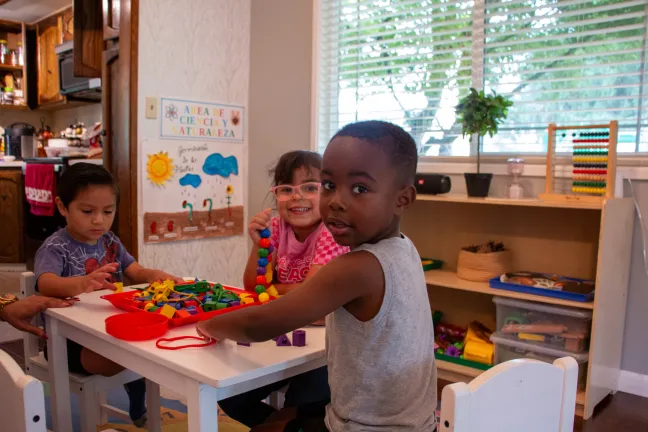
Approved by Multnomah County voters in 2020, Preschool for All provides tuition-free preschool to 3- and 4-year-olds. Under the ballot measure, universal coverage means having enough spaces available for every eligible child whose family wants free preschool.
The change in the number of seats needed is being driven largely by shifting demographics.
New projections prepared by Portland State University’s Population Research Center show that Multnomah County’s population of young children is declining as birth rates fall and families with children move out of the county. The center developed the projections to help the county estimate the number of children likely to participate in Preschool for All.
The new projections followed a recommendation from Preschool for All’s Technical Advisory Group, an independent advisory body required under the ballot measure. Earlier this year, the group recommended commissioning a new demographic forecast after updated birth and migration data indicated that the pre-pandemic population estimates used during the program’s creation no longer reflected the number of young children expected to live in Multnomah County.
“The underlying demographic shift in Multnomah County toward lower birth rates represents a structural contraction rather than a temporary trend,” said Ethan Sharygin, director of the Population Research Center at Portland State University. “Our tracking shows a persistent decline in the young child population, driven by a 28% decline in regional fertility rates since 2015, and net out-migration of children. The downward trajectory is mirrored in local school districts, where declining kindergarten classes are consistent with our long-term regional outlook.”
Under the medium-growth scenario the county plans to use for program decisions, just under 14,000 Multnomah County residents are projected to be 3 or 4 years old in 2026. By 2030, that population is expected to decline to just over 13,000.
Not all of those children are expected to seek seats through Preschool for All. The county currently assumes 22.5% of 3- and 4-year-olds will either attend private preschool or come from families that do not plan to enroll their children in preschool. More than 2,000 additional children are offered free or subsidized preschool through state and federal programs such as Head Start and Preschool Promise.
After accounting for those children, the county estimates Preschool for All will need approximately 8,000 seats to achieve universal coverage.
The program is already approaching that level. Preschool for All offered more than 7,000 seats for the 2026-27 school year, marking the largest expansion in the program’s history.
The revised projections could also affect how Multnomah County approaches the tax that funds the program.
County officials used the updated population estimates in economic scenarios presented to the Board of County Commissioners during a July 21 work session. The analysis found that Preschool for All could continue operating if the county delays a proposed 0.08 percentage-point increase in the program’s marginal personal income tax for two years, moving the increase from 2027 to 2029.
The Technical Advisory Group has recommended the two-year delay, and County Chair Jessica Vega Pederson announced during an Aug. 11 work session that she supports the recommendation.
The demographic projections will continue to play a role in determining how many preschool spaces the county creates in future years. County officials plan to commission updated projections every few years as population trends change.
The Board of County Commissioners is scheduled to take final action on the Preschool for All tax schedule Aug. 27.