
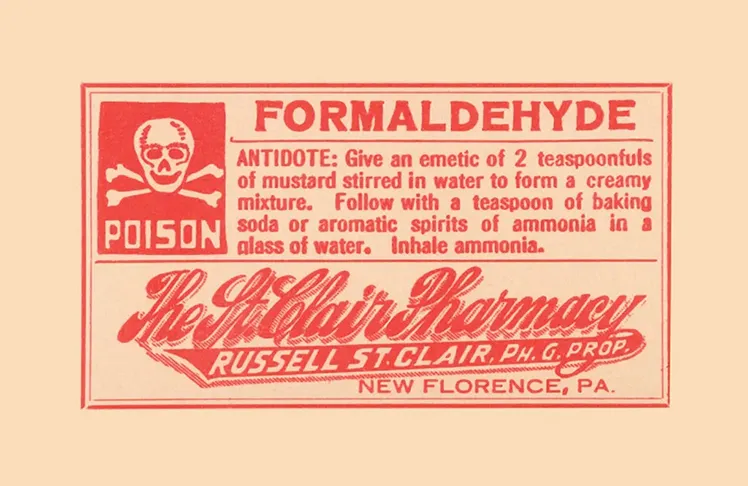
Formaldehyde is one of those chemicals that is absolutely everywhere. Naturally occurring in timber products, it’s also used for its preservative properties in other building materials, house goods, beauty products (including chemical hair relaxers), automotive parts, fertilizers, embalming…really, the list goes on and on.
But the bottom line is that formaldehyde is a carcinogen that most people encounter in their daily lives. And yet for even such a widespread chemical pollutant, Black people are often exposed to formaldehyde at higher rates than white people are — and it’s now the latest target for a regulatory rollback from the Trump Administration.
The EPA’s Convenient New Theory
Such a move has been expected since the beginning of the second Trump Administration, and earlier this month, the Environmental Protection Agency published a draft memo that operates under the assumption that there’s a safe level of formaldehyde exposure — something that has never been established scientifically.
The draft regulation would roughly double the allowable exposure level established by the Biden Administration. Formaldehyde causes more cancers than any other air pollutant — 77 cases for every 1 million people — and can create other respiratory issues, too.
Black residents breathed air with 7% higher concentrations than white residents.
The widespread use of formaldehyde does make it more of a challenge to control exposure levels. But by the same measure, formaldehyde is everywhere. And because there are both indoor and outdoor sources of formaldehyde, there are two major avenues for exposure to occur.
And while indoor levels are relatively consistent among socioeconomic groups, things look different for outside exposure, which can be significantly higher in some urban areas that have freeways and/or factories.
A study of Beaumont, Texas, a city near Houston that is about half Black, found that Black residents breathed air with 7% higher concentrations than white residents, with 44% of the formaldehyde coming from the local refinery and other industrial sources. White people living in the area had lower exposure simply because they lived further away from the sources of formaldehyde emissions.
A Test Case
While the change to formaldehyde regulations is cause for concern in and of itself, many see the approach Trump’s EPA is taking as the first step in a larger shift in how chemicals are regulated.
The chemical industry pushes for safe levels of exposure in regulations, even if they don’t exist, so that there’s a range of pollution that they don’t have to address, David Michaels, an epidemiology professor at the Milken Institute School of Public Health at George Washington University, explained to The New York Times.
“It’s a signal of the approach that E.P.A. will take and has consequences for other carcinogens,” he said. “It’s antithetical to the rhetoric of ‘Make America Healthy Again.’ This will do the opposite.”
It’s no exaggeration to say that this change is just what the chemical industry wants: the top two people in the EPA department that regulates chemical safety joined the agency after working as higher-ups at the American Chemistry Council, the industry’s leading trade association.