
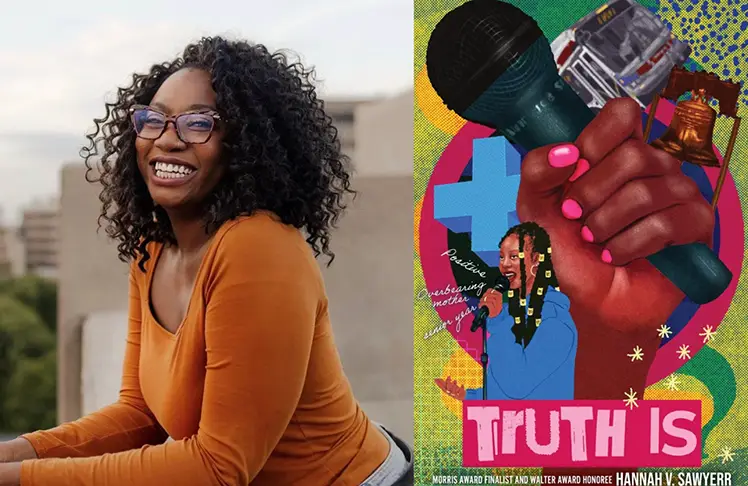
When it comes to “Truth Is,” her new young adult novel, acclaimed author Hannah V. Sawyerr pulls no punches. When her 17-year-old protagonist, an aspiring poet with a turbulent life who finds herself with an unwanted pregnancy, chooses abortion over motherhood, Sawyer affirms it as the right choice — full stop.
The book “is a pro-choice novel in every sense of the phrase,” she wrote in an essay published in Ms. magazine last month.
Rather than write something preachy, however, Sawyerr set out to create a resource for young people — a book that can educate as well as inform them. That’s especially important, she says, at a time when reproductive health access is increasingly restricted, and sex education classes have all but disappeared for K-12 students in some states.
Writing for Young People in a Post-Roe America
Published in September, “Truth Is” was listed as a finalist for the 2025 National Book Award under the Young People’s Literature category. It’s the latest honor for Sawyerr, who was Baltimore’s 2016 Youth Poet Laureate as well as a finalist for or winner of multiple literary awards.
But “Truth Is” may be her most ambitious work yet. It follows Truth Bangura, a troubled teenager who chooses an abortion after discovering she is pregnant with her ex-boyfriend’s child. But when she delivers a poem about it onstage, the response from her friends and family compels her to reckon with her choice.
The book also comes at a unique time in American history.
Since 2022, when the Supreme Court struck down the landmark Roe v. Wade decision that legalized abortion, access to the procedure is a state-by-state patchwork. Many red states have enacted near-total bans or severe restrictions and shut down clinics, while the blue states that have protected abortion rights have seen surges in out-of-state demand.
Meanwhile, women who want or need the procedure face increased travel and higher costs — developments that have a significant impact on Black women and other marginalized groups.
Filling the Gaps Left by Sex Education Cuts
Even as abortion became more complex and more expensive, some states and districts have restricted access to reproductive education in K-12 schools or eliminated it entirely — information that, studies indicate, helps reduce unwanted pregnancies among teens and young adults.
Sawyerr says she wrote the book in part to fill that gap. She spent a significant amount of time at her local Planned Parenthood clinic, interviewing medical professionals and doing research about abortion options.
Initially, Sawyerr intended to write a book about “mommy issues,” with her protagonist deciding to keep the child. But she says a chance remark about self-love at a conference in 2022 changed her perspective and convinced her to change the plot.
“It became less about a girl who really wanted to escape her circumstances, and more about a girl who loved herself enough to know that she wanted more for herself.”
Hannah V. sawyerr
The book, a novel in verse, narrates Bangura’s life through a series of poems. It is replete with themes of reproductive rights, bodily agency, teenage pregnancy, and choosing oneself.
A book about abortion and poverty may not lend itself to being for young audiences — Sawyerr knows that. But she believes that people should have more confidence in what young readers can handle.
“We can’t be with young people, 24/7 and so we don’t really know what they’re exposed to,” she says. “And I think literature is a very safe and a very reliable way to learn about these things.”