
As told to Denise Mason Bullitt
Growing up in the church, the daughter and granddaughter of civil rights advocates and educators, I was immersed in a wellspring of inspiration that transformed into a calling to serve. I felt the need to stand and tell the stories of God’s people — particularly those that looked and lived like me.
As a youth and music minister, I first began designing skits and plays that would become my life’s work.
In 1999, God called me to leave my position as a middle school teacher working with students no one else wanted to teach. He told me to step full-time into the role of a Gullah storyteller.
I was 25 credit hours shy of completing my doctoral studies in educational administration and curriculum design at the University of South Carolina. I was surprised and a bit nervous, but also thrilled.
At Beaufort County Schools, I worked hard to reach my students. I noticed that when I brought Gullah history to life through dramatic presentations, something special happened.
My students — who carried this history in their blood — began to truly connect with it for the first time. What had once been abstract became relevant. The more I brought our stories to life, the more they discovered a sense of self that they did not know they had.
Children and youth whom the world had written off began to reclaim their worth and reconnect with our community. Parents, teachers, and students all began asking to see the stories for themselves. When I prayed for guidance, God’s answer was clear: keep going.
So I did.
Eventually, God told me, “This is your ministry to the world.”.
It began with telling stories I had carried in my heart since childhood, sitting on my grandmother’s knee. Born and raised in South Carolina’s Lowcountry, I was steeped in tales of Robert Smalls, Harriet Tubman, the Battle of Gray’s Hill, and the enduring legacy of Port Royal.
I always knew I walked on sacred ground, and I wanted the world to know it too. Especially the children of Beaufort.
Our true wealth is not measured in dollars, but in the values that have carried us through generations: resilience, optimism, tenacity, and faith.
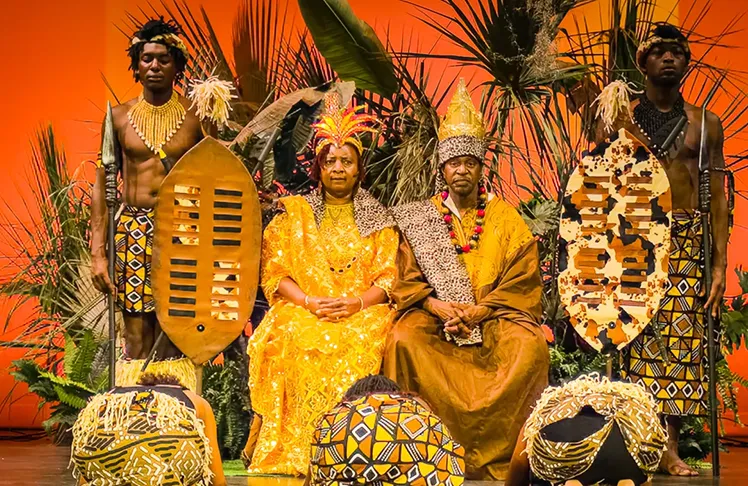
In the beginning, the work came easily. Folks would call, ask me to perform, sing, share a story. Inspired by my grandmother, I created a character, Aunt Pearlie Sue, in her likeness. Not wanting to go alone, I invited my sisters and cousins to join me. That’s how Aunt Pearlie Sue and the Gullah Kinfolk were born.Looking back, I’m amazed at how naturally the pieces fit together.
I have had the honor of performing wherever we were invited — from the rice fields of the Lowcountry to the White House, from Sierra Leone to Barbados. Across the country and around the world, I have discovered a deep hunger for the authenticity of Gullah history.
This work has allowed me to share the cultural stage with the likes of other Gullah artists like Arianne King-Comer, who works in indigo; wood and found objects artist Hank D. Herring and folk musician Marlena McGee Smalls. I’ve worked with curator Louise Cohen and the historic Penn Center in St. Helena, South Carolina.
Still, at the heart of my mission are the children — those same students who first heard my stories years ago.
According to a recent U.S. Senate Joint Committee report, Black people face persistent economic disparities, earning just 62 cents on the dollar compared to white households and experiencing significantly higher unemployment rates. And yet, the issue is not solely financial.
Throughout my travels, I have witnessed a growing void among our young people when it comes to Black history. We are a people of extraordinary resilience and strength. But too often we remain unaware of this legacy simply because we do not know our history.
Our true wealth is not measured in dollars, but in the values that have carried us through generations: resilience, optimism, tenacity, and faith.
Those compass points guided our ancestors through unimaginable hardship. Being a “culture keeper” like me means using our talents and resources to pour these values back into our communities — especially into the rising generations.
So, I invite you to join me in learning more about our history as Black people, and who we were created to be. Join me by supporting our mission and performances, or by visiting our sacred places, walking in the footsteps of our ancestors. Join me and become a culture keeper.
To learn more about the work of Anita Singleton Prather and the Gullah Traveling Theater, Inc., or to support their mission, please visit www.GullahKinfolkTravelingTheater.org. Together, we can preserve our stories, honor our heritage, and inspire a new generation of culture keepers.