
By Zoe Sottile, CNN
(CNN) — As Department of Homeland Security agents are expected to surge into New Orleans this week, the latest Democrat-led city targeted by a federal immigration enforcement crackdown, a common thread has emerged among local officials: They’re being kept in the dark – and it’s spiking fear among the immigrant community.
There is “mass chaos and confusion” as the campaign looms, newly elected Councilmember at-Large Matthew Willard told CNN. He said he and other local officials have received scant details about the operation – and the information they have received “isn’t reassuring.”
“We’re really just fearful of the unknown, and looking at the coverage that we’ve seen in other cities by CNN, we certainly don’t want that here in the city of New Orleans,” he said.
He’s one of several leaders who say that they’re looking to DHS operations in past cities, both for examples of the heavy-handed tactics federal agents employ and strategies communities can use to protest and organize.
The operation comes after top Border Patrol official Gregory Bovino and Customs and Border Patrol agents spent around a week in Charlotte, North Carolina, following a weekslong Chicago-area operation that led to harrowing scenes: a daycare teacher arrested inside a childcare center; parents separated from their US citizen children; and protesters struck or hit with tear gas by federal agents.
Here’s what we know about the expected operation in New Orleans:
When will the operation start?
The operation is expected to start as early as December 1, according to two sources familiar with the planning. Bovino will be joined by 250 Department of Homeland Security agents – roughly the same number sent to other cities to assist the top Border Patrol official, the sources said.
In response to CNN’s questions about operations in New Orleans last week, DHS sent CNN a statement from Assistant Secretary Tricia McLaughlin: “For the safety and security of law enforcement, we’re not going to telegraph potential operations.”
It’s unclear how long the agents are expected to stay in New Orleans.
Why is DHS targeting New Orleans?
President Donald Trump has previously floated New Orleans as a destination for his federal crackdown, saying in an Oval Office meeting this year the city “has a crime problem.” The Crescent City is a Democrat oasis in a Republican state, whose governor is a Trump ally.
And Louisiana is familiar territory for Bovino, who led Border Patrol’s New Orleans Sector during Trump’s first term.
Asked by CNN last month how he chooses cities for targeted operations, Bovino cited Trump, DHS Secretary Kristi Noem, and “what our intelligence says.”
Willard, a Democrat, told CNN he doesn’t “understand the strategy of them coming to the city of New Orleans,” which is a “welcoming place for visitors from all over the world.”
Federal agents “have no strategy,” the councilman-elect said. “They have no real plan. It’s really just to invoke fear in people and sort of a power move, a demonstration of power.”
He noted that Louisiana does not share a land border with any other country, “so for Border Patrol to come into the state of Louisiana really makes no sense to me.”
Similarly, Susan Weishar, a longtime immigrant rights researcher and advocate in New Orleans, said the blitz “doesn’t make any sense in terms of public policy or public safety,” noting the city’s recent crime drop.
Instead, it seems “we’re just being punished for voting the way that we did,” she said.
What is the immigration landscape in New Orleans?
Part of why the Big Easy has struck some as an odd destination for the immigration crackdown is because the city, while known as a cultural melting pot, has a smaller proportion of immigrants than other cities targeted by DHS. Roughly 6.5% of the city’s total population are immigrants, including naturalized US citizens, according to data from the US Census Bureau. Over half of the city’s immigrants are non-US citizens.
But immigrants play an important role in the city’s economy, particularly in the service and construction industries. They were also essential to the reconstruction of the 307-year-old city after the devastation of Hurricane Katrina.
Around half of the reconstruction workers after the hurricane were Latino and a quarter were undocumented immigrants, primarily from Mexico and Honduras, a study from the University of California, Berkeley Human Rights Center found.
Neighborhoods with significant Latino populations include parts of Metairie, Bridge City, Terrytown and Harvey, census data shows.
The city is also home to historic immigrant populations, including a significant Vietnamese American community that originated when refugees fled the fall of Saigon.
Immigrants to New Orleans “have been widely welcomed and have assimilated well and become a part of the fabric of our communities,” Weishar said. She noted that the city has a small-town feel where people know their neighbors.
“This is why so many people in our city and across the region are just so outraged, disappointed and saddened that suddenly our government is sending in federal agents to terrorize our immigrant neighbors, friends and parishioners,” she said.
What have politicians said?
New Orleans Mayor-elect Helena Moreno, who was born in Mexico, has said she’s received limited information about the expected operation but that the fear among immigrant communities is palpable.
“You have parents who are scared to send their children to school,” Moreno, a Democrat, told CNN affiliate WWL. “At my church,” she said, “there is a one o’clock service, Spanish-speaking service every Sunday, that keeps getting smaller and smaller. People are really, really scared.”
Her office has released guidelines for interacting with immigration enforcement agents, urging people to comply with orders from law enforcement and to record with their phones if they feel safe.
US Rep. Troy Carter, who serves on the House Homeland Security Committee, told WWL he also wasn’t briefed on any Border Patrol operations and suggested federal agents had profiled people in other cities.
“Turn on the television. Turn on the internet. Pick up a newspaper and you find some people who were profiled because they looked a certain way,” Carter said. “Never mind the fact that they were actually US citizens.”
The state’s Republican Gov. Jeff Landry has taken a different tack, calling for stronger immigration enforcement in the city and state.
“New Orleans is a place under which we’ve had illegal criminal activity, alien activity,” he said in an interview on Fox News last week.
Speaking about Kenner, a New Orleans suburb where census data estimates say about 10% of the population are not US citizens, he added, “When ICE is ready, we certainly welcome them to come into the city and be able to start taking some of these dangerous criminal illegal aliens off of our streets.”
How is the immigrant community responding?
Even before the operation has officially begun, it has already triggered fear and anxiety among the Crescent City’s close-knit immigrant communities.
Willard said, “We’ve had parents reach out to the school systems, seeing if they could go back to virtual learning while Border Patrol is active in the city of New Orleans.”
The owners of several businesses told CNN that they’ve had to cut their hours or pause projects as immigrant workers are too scared to come to work.
For immigrants in the city, there’s “a lot of anxiety and uncertainty, because you’ve seen what’s going on in other cities,” Jose Almendares, the owner of Honduran restaurant Tia Maria’s Kitchen, told CNN last week. “And a lot of people are scared and they’re hiding.”
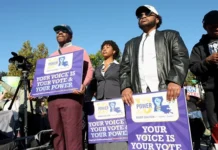
Organizers and activists have also rushed into action to prepare, distributing hundreds of whistles (a tool used in other cities to alert sightings of immigration enforcement agents), hosting know-your-rights trainings, holding food drives for neighbors who are scared to leave their homes, and organizing protests and neighborhood watch groups.
“This city is really, really used to having to come together after every storm, whether that’s a hurricane or snowstorm or the pandemic,” Rachel Taber, a volunteer with New Orleans-based grassroots organization Unión Migrante, told CNN. “And I think that we can expect more of that.”
What happened in previous operations?
Bovino’s previous operations in other Democrat-led cities have seen masked, armed agents taking to the streets in unmarked vehicles – a hallmark of immigration enforcement under the Trump administration. Thousands of immigrants have been arrested, some without criminal records, despite the administration’s emphasis that they’re targeting the “worst of the worst.”
During “Operation Midway Blitz,” DHS’s operation in Chicago and the surrounding areas, more than 3,000 migrants were arrested. Federal agents shot several people, at least one fatally. In September, an ICE officer fatally shot Silverio Villegas-Gonzalez, an undocumented immigrant from Mexico who worked as a cook, who DHS said resisted arrest and dragged the officer during a vehicle stop in a Chicago suburb. And a 30-year-old American woman was shot five times in her vehicle by a DHS agent in October.
Bovino and his agents also regularly used tear gas and other “crowd control” measures against the protesters they faced in Chicago, who they said were impeding immigration operations and threatening officers. A federal judge issued an order on November 6 restricting agents’ use of force against protesters, although an appeals court has temporarily blocked the judge’s order.
In Charlotte, North Carolina, where Bovino last oversaw arrests, the operation was much shorter than that in Chicago. Operation “Charlotte’s Web” – criticized by the granddaughter of the author of its namesake – led to over 370 arrests over more than five days and disrupted life across the city as businesses closed, thousands of children were kept home from school, and widespread fear took hold in the community.
Where will Border Patrol go next?
It’s unclear where exactly Bovino and his agents will be headed after New Orleans, although he and other officials have floated the names of various Democrat-led cities as possible targets for federal intervention.
“You’re going to see us redeploy to – it could be New York, it could be Chicago, it could be Charlotte,” Bovino told Fox News earlier in November from West Virginia, before the Charlotte operation was officially announced.
The president, however, has dismissed immediate plans to send federal authorities to New York City, his hometown and a Democratic stronghold, after meeting with the city’s Mayor-elect Zohran Mamdani. “Other places need it more,” he said after the surprisingly friendly meeting with Mamdani, a Democratic socialist and a vocal critic of the president. But he noted he would send in the National Guard to the city “if they need it.”
The-CNN-Wire
™ & © 2025 Cable News Network, Inc., a Warner Bros. Discovery Company. All rights reserved.