
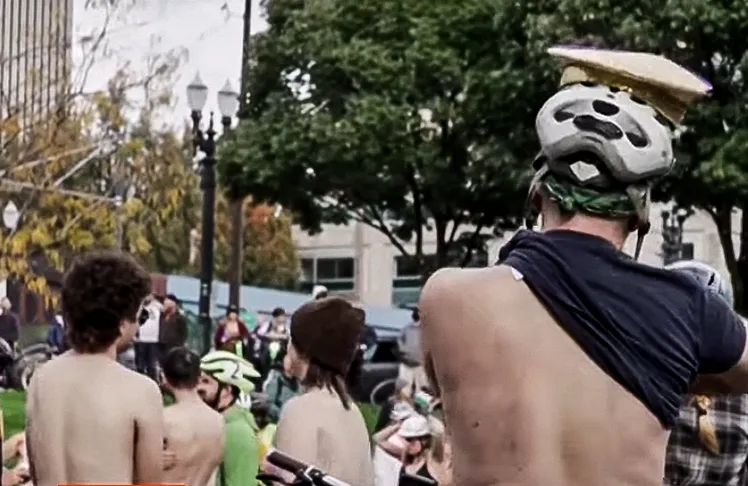
Since its inception in 2004, Portland, Oregon, has become synonymous with its vibrant and audacious naked bike rides, transforming the streets into a spectacle of freedom and expression. Each year, these rides often cause traffic disruptions as thousands of cyclists pedaled through the city, accompanied by the upbeat sounds of music blasting from speakers. In some years, participation has swelled to around 10,000 riders, demonstrating the event’s popularity, as highlighted by the Portland World Naked Bike Ride.
This past Sunday, in a striking display of the city’s quirky spirit, protesters opposed to the Trump administration took to the streets in an impromptu “emergency” edition of the World Naked Bike Ride. Participants embraced their nudity as a form of protest, cycling through Portland in various states of undress, echoing the city’s irreverent character while making a bold statement against political actions.
In the days leading up to the ride, gatherings outside the immigration facility in Portland have drawn large crowds, with demonstrators often adorned in outrageous inflatable costumes—frogs, unicorns, axolotls, and bananas—facing off against federal law enforcement. The absurdity of their attire starkly contrasted with the tense environment, where law enforcement frequently resorted to deploying tear gas and pepper balls in response to the protests.
Traditionally held during the summer months, this weekend’s hastily organized ride was deemed essential by its coordinators to voice opposition to President Donald Trump’s controversial plans to mobilize the National Guard in an effort to suppress ongoing protests. The urgency of the situation called for immediate action, prompting organizers to coordinate this memorable demonstration.
As riders cycled through the streets, they made their way to the U.S. Immigration and Customs Enforcement building, a focal point of the protests. Authorities at the facility instructed demonstrators to remain off the streets, warning that those who ventured into roadways could face arrest. Despite these restrictions, the spirit of protest remained alive, with participants determined to make their voices heard.