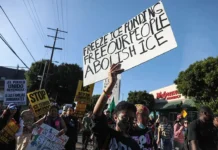

U.S. Immigration and Customs Enforcement (ICE) Director Tom Homan announced on Thursday morning that the agency is preparing to increase enforcement operations across the nation following Labor Day. This includes heightened activity in cities like New York, Los Angeles, and notably, Portland. “Expect to see a ramp-up of operations in New York, a continuation in LA, and also in Portland and Seattle,” Homan stated.
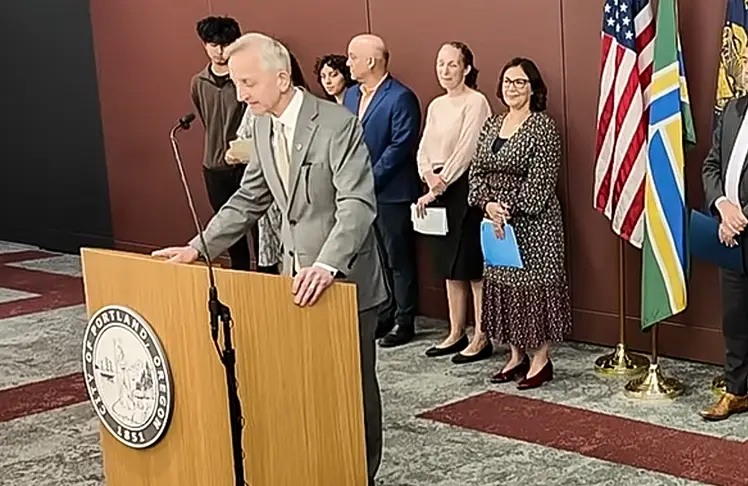
During his visit to Portland on August 21, Homan met with ICE personnel to discuss operational strategies. Following this meeting, Portland Mayor Keith Wilson reiterated the city’s commitment to its sanctuary status, emphasizing that city employees, including police officers, will not participate in federal immigration enforcement activities.
In a related press conference, the White House’s border czar highlighted that ICE operations are set to expand in all sanctuary cities that choose not to cooperate with federal immigration efforts. Homan contrasted this with practices in states like Texas and Florida, where local sheriffs are collaborating with ICE to detain individuals and inform them of impending releases.
An analysis conducted on August 10 by Syracuse University’s Transactional Records Access Clearinghouse revealed that over 70% of individuals currently held in ICE detention have no prior criminal convictions. This statistic raises concerns about the motivations behind ICE’s enforcement strategies.
In response to the anticipated increase in ICE operations, the Latino Action Network and the Oregon Law Center have developed family preparedness packets. These resources include legal templates, childcare plans, and emergency contacts to assist families in navigating potential encounters with immigration authorities.
While ICE asserts that its focus is on detaining criminals, advocates like Muñoz argue that even minor infractions, such as traffic violations, are resulting in detentions. Many community members are expressing feelings of being unfairly targeted, raising questions about the broader implications of these enforcement tactics on immigrant communities.