
By The Portland Medium
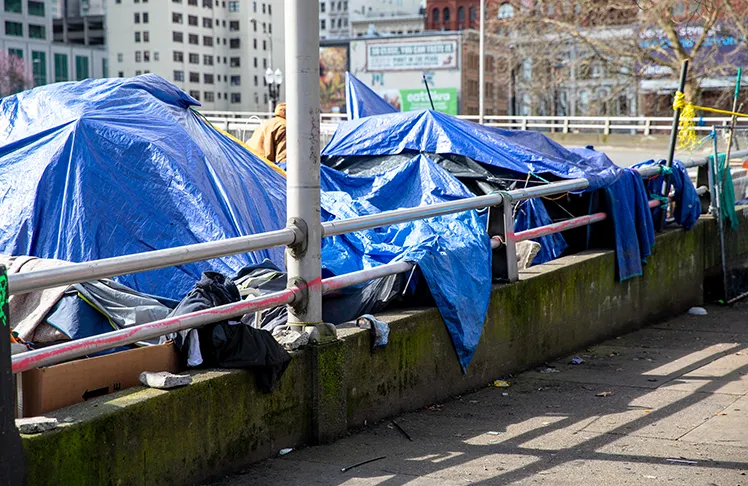
Multnomah County implemented a new administrative rule this week that significantly limits the distribution of county-purchased tents to individuals experiencing homelessness. Under the new policy, tents will only be distributed during declared severe weather and cold weather advisory events. The decision marks a strategic shift in the county’s approach to homelessness, emphasizing long-term housing and shelter capacity over interim survival gear.
Chair Jessica Vega Pederson announced the rule change as part of her administration’s broader effort to reduce unsheltered homelessness by focusing on permanent housing and treatment services.
“Making sure people in our community are safe and housed is goal one,” said Chair Vega Pederson. “As we build more shelter beds and place more people in housing, our need to hand out supplies that help people survive outside will decrease.”
Although the rule restricts the use of county funds for tents outside of severe weather emergencies, the county will continue year-round distribution of other vital supplies. These include hygiene kits, basic first aid, water, emergency clothing, sleeping bags, and blankets, which outreach providers can distribute to those living unsheltered.
The rule also allows flexibility for outreach providers. They can continue to use annually allocated client assistance funds to purchase and distribute tents on a case-by-case basis, particularly when no appropriate shelter beds are available or when individuals face specific health concerns. These flexible client funds are also used to address other needs such as transit passes, meals, and clothing.
Commissioner Julia Brim-Edwards, who has advocated for policy changes addressing the impacts of encampments, voiced support for the new approach.
“The proposed budget reduction for tents and tarps and the new proposed distribution rule is an important change and one that I support,” said Brim-Edwards. “Tents are not a solution to homelessness. This shift also acknowledges the impact unmanaged encampments have on public health, safety, accessibility and livability.”
The need for a formalized distribution policy arose from changes prompted by the COVID-19 pandemic. Before 2020, no formal guidelines existed, and providers distributed tents and tarps using donations, agency funds, or client assistance funds. During the pandemic, the county launched a centralized supply center and expanded access to supplies to help individuals remain safe amid shelter capacity limits and public health restrictions.
The interim policy established in October 2024 was the first to define distribution methods, reporting procedures, and criteria for the use of materials like tents and tarps. The new permanent rule replaces that interim guidance and formalizes the county’s evolving strategy.
Under the revised policy, Multnomah County will consolidate two existing supply warehouses—one managed by the Office of Emergency Management and the other by the Homeless Services Department—into a single distribution point. This change is expected to streamline operations and save $941,000, which will be redirected to maintain and expand essential services.
Supply distribution will be coordinated through monthly appointments with eligible street outreach service providers. Providers can request quantities based on their coverage areas and are expected to report annually on the use of distributed supplies to the Homelessness Response System’s Implementation Committee.
While tents offer a temporary refuge, county leaders emphasize that they are not a sustainable solution. Supplies like tents and tarps can mitigate poor health outcomes and offer a degree of safety and privacy, particularly when shelter options are unavailable. However, county officials stress that the goal is to reduce reliance on such gear as shelter and housing capacity expands.
Multnomah County’s efforts to bolster shelter and housing options have shown tangible results. As of February 2025, providers funded by the Homeless Services Department were supporting 7,398 formerly homeless individuals to remain stably housed with the help of rent assistance and other services—up 79% from January 2021.
The county and the City of Portland have also increased the number of shelter beds by 81% since 2020. Eighteen new shelters have been opened during that time, and the county has contributed funding and logistical support for Portland’s Safe Rest Villages, Temporary Alternative Shelter Sites, and overnight-only shelters.
These expansions are part of a long-term vision in which shelter and housing capacity is sufficient to make the distribution of tents largely unnecessary. County leaders believe that reducing the need for survival gear will not only improve public health and safety but also help people transition more quickly into stable housing and support services.
As the County refines its homelessness response and invests in long-term solutions, Vega Pederson reaffirmed her commitment to achieving lasting results.
“This community can trust that we’re focusing on meeting critical goals — fewer people sleeping on the streets, more people entering treatment, and a safer community for everyone,” said Vega Pederson.