

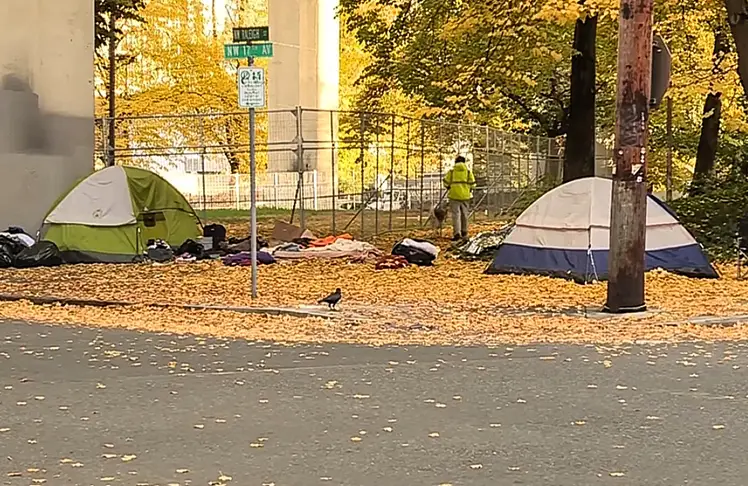
Portland’s public camping ban is set to take effect this weekend, with Mayor Keith Wilson announcing that police will begin issuing citations and conducting warrant checks on individuals camping or residing in vehicles on public property starting November 1. The implications of this change for those living outdoors are still uncertain. Under the new policy, individuals are prohibited from tent camping or staying in vehicles on public property—such as sidewalks, parks, and streets—if “reasonable shelter” options are available. If shelter is not accessible, the policy outlines specific limitations on activities while camping.
Under Portland’s new public camping ban, the following specific activities are prohibited for campers:
1. Using Propane Heaters: Campers cannot utilize propane heaters for warmth.
2. Digging into the Ground: Any digging or altering of the ground is not allowed.
3. Starting Fires: Campers are prohibited from starting fires for cooking or heating.
4. Selling Bicycles or Car Parts: Engaging in the sale of bicycles or vehicle parts while camping is not permitted.
5. Blocking Access to Private Property: Campers must not obstruct access to private property.
Violating these regulations can lead to citations, which may incur fines or potential jail time. Violating these regulations can result in citations, which carry fines of up to $100 or potential jail time of up to one week.
This policy was initially adopted last year by a previous city council and mayor, but Mayor Wilson stated in February that enforcement would not begin until he could provide hundreds of new overnight shelter beds, a key promise from his campaign. Wilson claims the city now has sufficient “consistent available capacity” in its overnight shelters to address the needs of those living outside.
However, the number of available beds falls short of the estimated 7,400 individuals experiencing homelessness in Multnomah County. Currently, there are about 3,500 total shelter beds in the county, including roughly 1,000 new overnight-only options. Most of these beds are occupied on any given night, with the exception of the city-operated overnight shelters, which often have high vacancy rates, sometimes reaching 80% of beds empty on average nights.