

By Alvin A. Reid
Churches across the region are coming together to help the community recover the shock and wreckage of the May 16 tornado.
The Church of God in Christ Women’s International Convention continues this week in St. Louis, and it has brought together hundreds of representative in St. Louis and many joined with faith, healthcare, and community leaders to respond with compassion and action on Wednesday at Williams Temple Church of God in Christ, 1500 N. Union Blvd.
COGIC, in partnership with the Urban League of Metropolitan St. Louis, Affinia Healthcare, and Deer Valley Home Health, hosted an Emergency Tornado Relief Giveaway to provide immediate assistance to families affected by the storm.
Relief items included food, bottled water, clothing, hygiene kits, medical and home healthcare resources, and more — available free of charge.
“As the community recovers from the recent tornado outbreak, this event is a collaborative response to meet the urgent needs of those displaced or impacted by the storms,” Bishop J. Drew Sheard, Presiding Bishop, Church of God in Christ, said in a release.
“By joining forces, local faith leaders, nonprofit organizations, and healthcare providers are delivering relief, hope, and essential services to the families who need them most.”
Other clergy efforts include:
Grace United Methodist Church is collecting donations of clothing, food and supplies.
Catholic Charities is offering assistance for those affected by the storms. Visit their website to request help.
The American Red Cross has opened four shelters. Identification is not required:
- Friendly Temple Outreach Center: 6356 Dr. Martin Luther King Dr.
- 12th & Park Recreation Center: 1410 S. Tucker Blvd.
- Refresh Community Church: 829 N Hanley Rd.
- Peter & Paul Community Services: Garfield Building, 2612 Wyoming St.
Centennial Christian Church has established a GoFundMe fundraising drive for the church and for the Fountain Park neighborhood.
The Post-Dispatch reported that more than $18,000 of its $500,000 goal had been raised.
Bread of Life has also set up a GoFundMe account. It has raised received than $7,000 of its $9,000 goal.
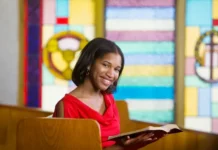
Word In Black religion writer Dorothy Boulware writes this week that the Bible still holds the title as the best-selling book in history, with an estimated 5 to 7 billion copies sold worldwide.
The King James version, with over 1 billion copies sold, is still the most popular version globally, while the New International Version (NIV) is the best-selling translation in the United States. And in the United States, it’s estimated that Bible sales top $425 million annually.
But with so many copies being sold all the time — 88% of American households own at least one copy, and the average household owns four — the question is whether or not they’re actually being read.
It turns out, only 11% of Americans report reading it daily. Is it difficult to fit Bible reading into our daily schedules? Is the Bible too hard to read? Does it not hold our interest?
Boulware posed these questions on Facebook, and several people weighed in. Sherry Hunt replied that she’s reading the Bible right now, specifically, the book of Judges, “Whew! Pray for me,” she requests.
J.C. Ryle, a 19th-century Anglican bishop, said, “Knowledge of the Bible never comes by intuition. It can only be obtained by diligent, regular, daily, attentive reading.”
Theologian A.W. Tozer, in complete agreement, said, “Nothing less than a whole Bible can make a whole Christian.”
Dr. Howard-John Wesley, senior pastor of Alfred Street Baptist Church in Alexandria, Virginia, famously encourages all who listen that reading the Bible will make you a better Christian.
And there’s hope: “Our youngest adults show signs of interest in the Bible, curiosity about it, and transformative interaction with it,” ABS Chief Program Officer John Farquhar Plake, editor in chief of the “State of the Bible” report, told Religion Unplugged. “Last year, 50% of Gen Z adults (ages 18-27) agreed that the message of the Bible has transformed their lives. This year, that number rose to 54%.”
A 2016 Lifeway Research Study revealed that about 20% of Americans say they have personally read the entire Bible at least once, with 9% saying they’ve read it more than once. But do folks read it cover-to-cover?
“I have NOT read the Bible cover-to-cover although I am a committed student of the Bible. I have preferred to study as I have been led, rather than reading sequentially because I am strengthened by a method of study to which I feel called,” says Charlene Ndi.
Ndi also says that reflecting on Bible-reading habits “prepares us to give account for the spiritual lives we live.”
Rusty Saunders, Minister of Music and Arts on The Hill, said he hasn’t read the Bible cover-to-cover, “But I’m sure I will be attempting this task again in the future.”
Juanita Shields says she’s tried several times, “And I’m going to try again and get back to you!”
This post appeared first on St. Louis American.